BobsRide: a ride-hailing concept
A rider app and a driver app for autos, bikes and cabs, from the team that built, operated and transferred ride-hailing platforms for Africar and Baayu.
- Category
- Ride-hailing app
- Platforms
- Rider app, Driver app
- Status
- Concept, ready to build

- 2Ride-hailing platforms built, operated and transferred: Africar and Baayu
- 2Apps in this concept: rider and driver
- 75Screens, in light and dark
Where this comes from
We have built ride-hailing platforms for Africar in Nigeria and Baayu in India, under a Build, Operate and Transfer model.

Once a platform is transferred, the product and its screens belong to the client, so we don’t show them here. This concept, BobsRide, shows the same product thinking: a rider app and a driver app for autos, bikes and cabs, designed from scratch.
Build, Operate and Transfer
Build
We design and build the rider app, the driver app and the systems behind them.
Operate
We run the platform in production: hosting, monitoring, updates and support, while the client grows the business.
Transfer
We hand over the code, the infrastructure and the know-how to the client’s own team, so they own the platform outright.
The problem
Ride-hailing looks simple until you build it. Riders want a fare they can trust, a driver who turns up, and a way out when something feels wrong. Drivers want steady trips, honest earnings and fast payouts. Every screen has to work in traffic, on an everyday phone, with one hand.
What does the rider app do?
Book in three taps
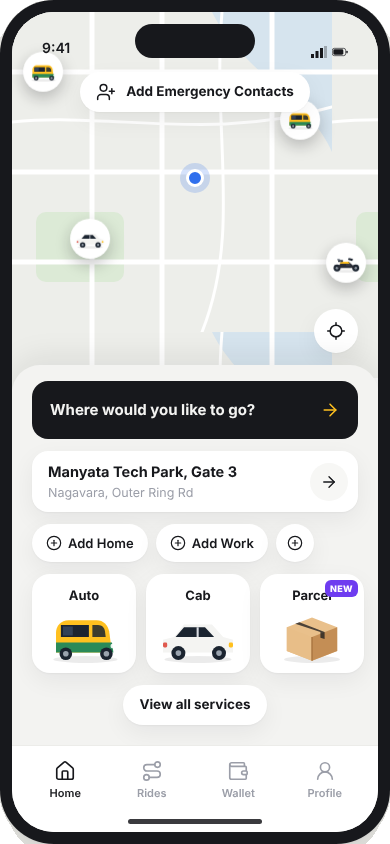
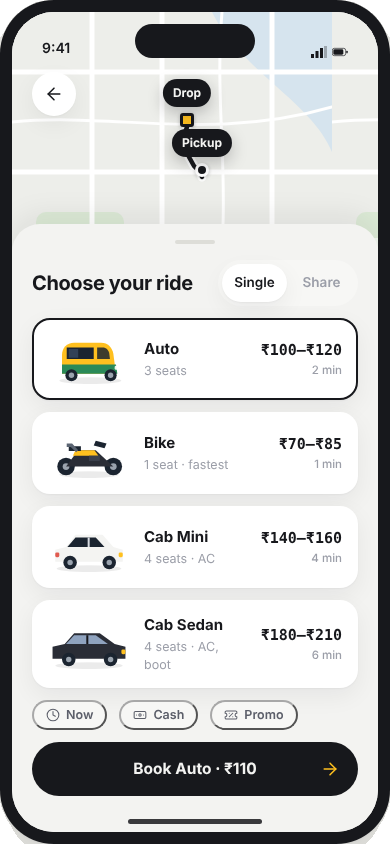
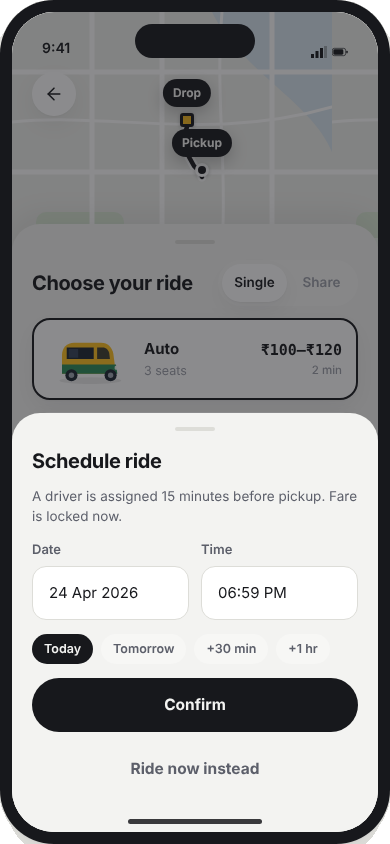
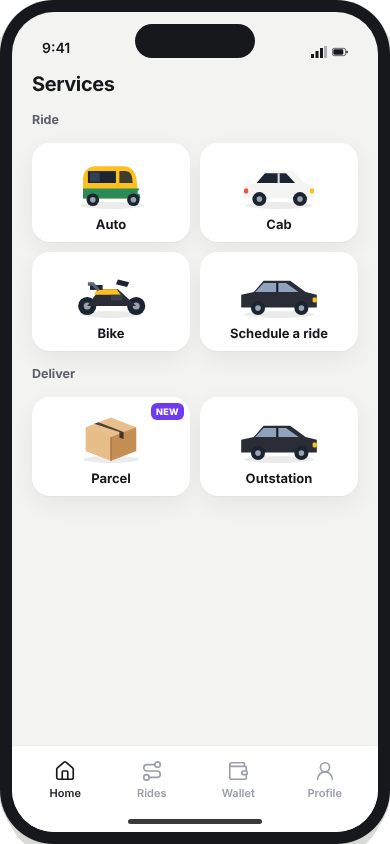
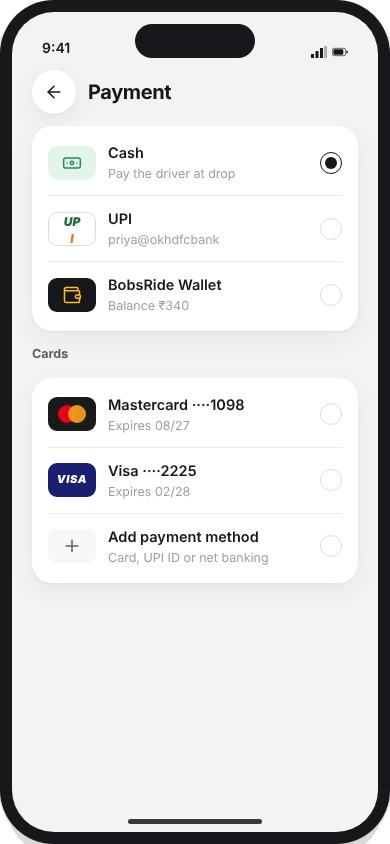
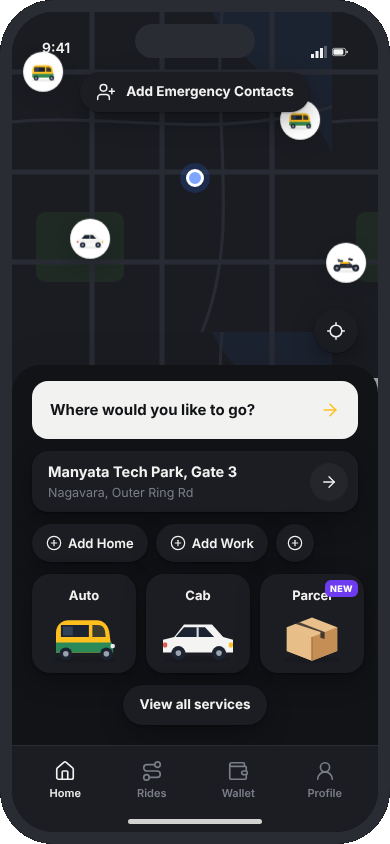
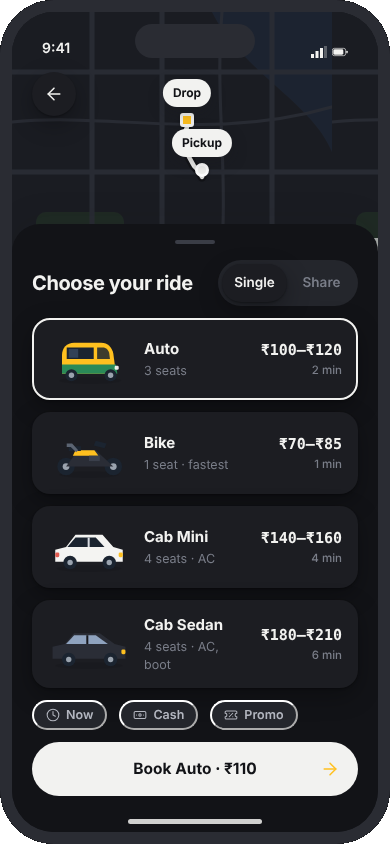
Home opens on the map with the rider’s last destination ready to tap. Autos, bikes, cabs and parcels sit one tap away, and every option shows a fare range and a pickup time before booking. Rides can be booked now or scheduled, and paid by cash, UPI, wallet or card, with promo codes applied at checkout.
A ride you can see
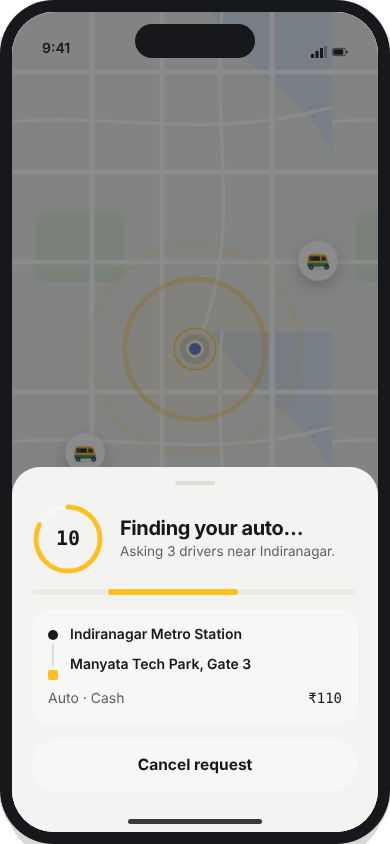
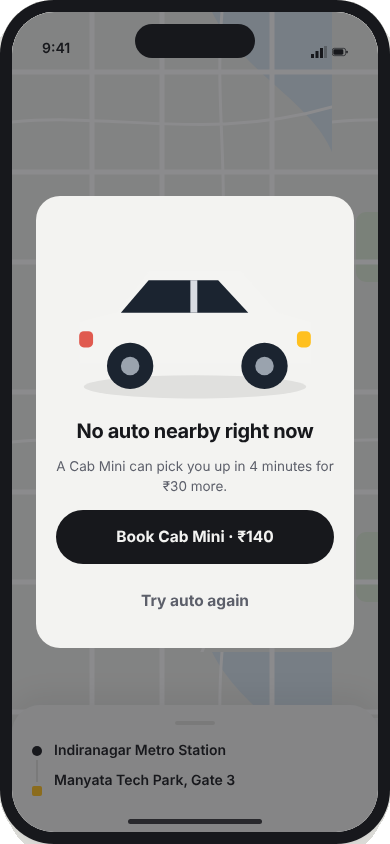
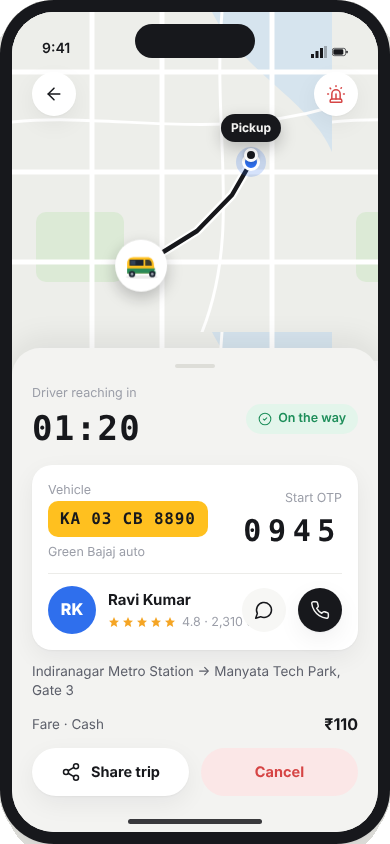
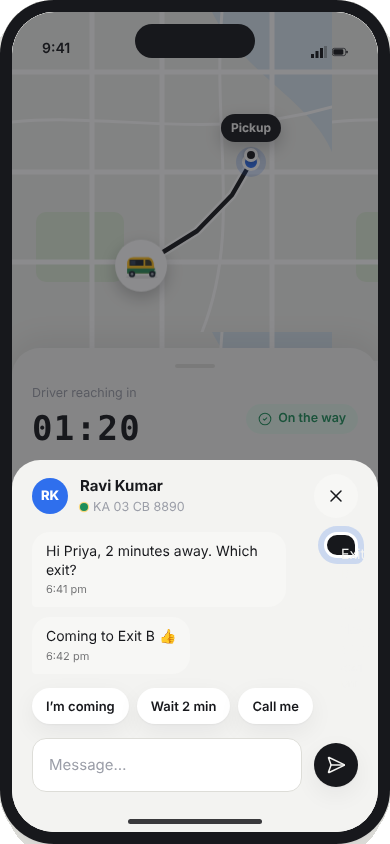
When no auto is nearby, the app suggests the next best option instead of a dead end. Once a driver accepts, the rider sees the vehicle number, the driver’s rating and a countdown to pickup. A 4-digit code makes sure the rider gets into the right vehicle, and quick replies in chat save typing at the kerb.
Safety built in
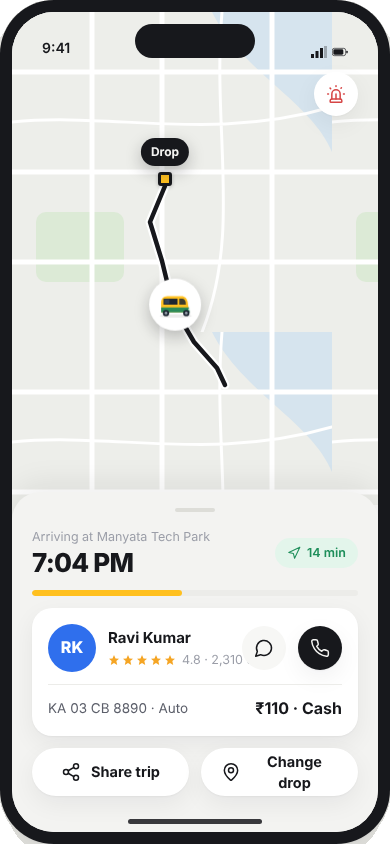
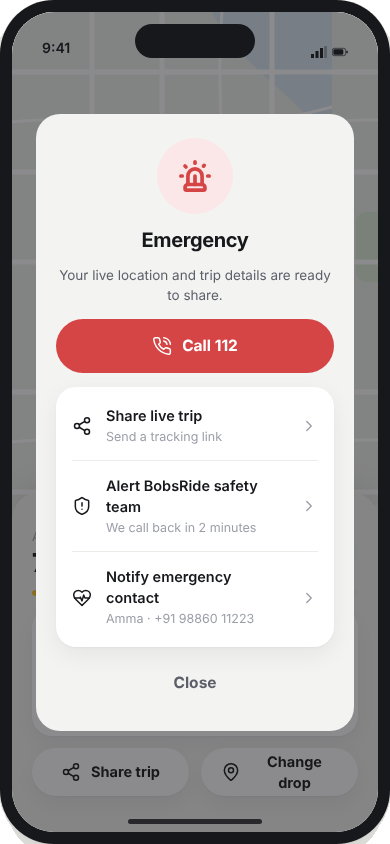
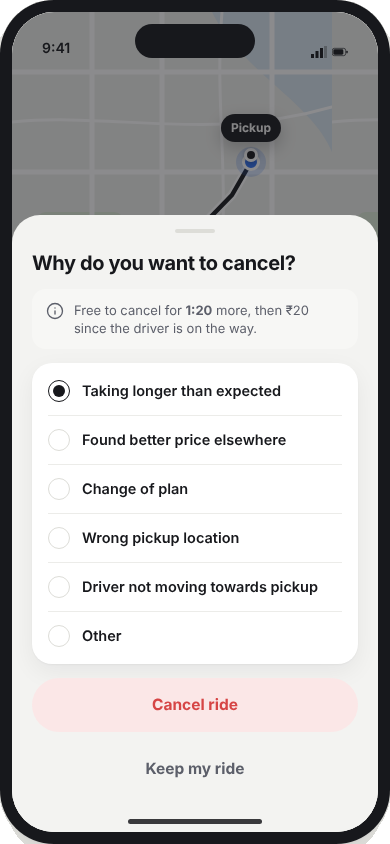
The in-trip screen shows the arrival time, a share-trip button and a way to change the drop. The emergency screen calls 112, shares the live trip, alerts the safety team and notifies an emergency contact. Cancelling asks for a reason and says upfront when it is still free.
After the ride
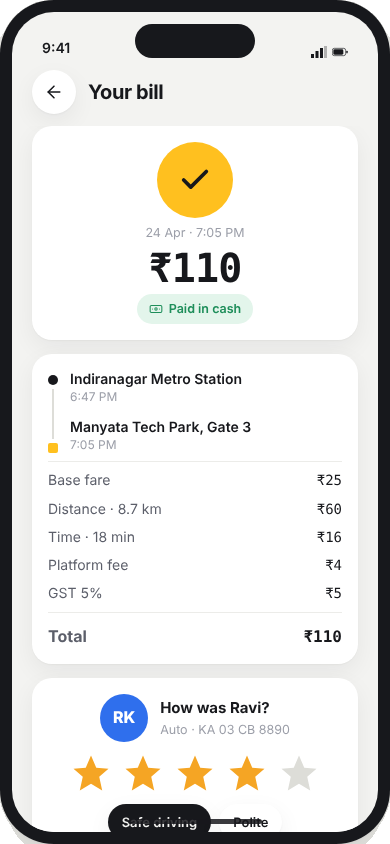
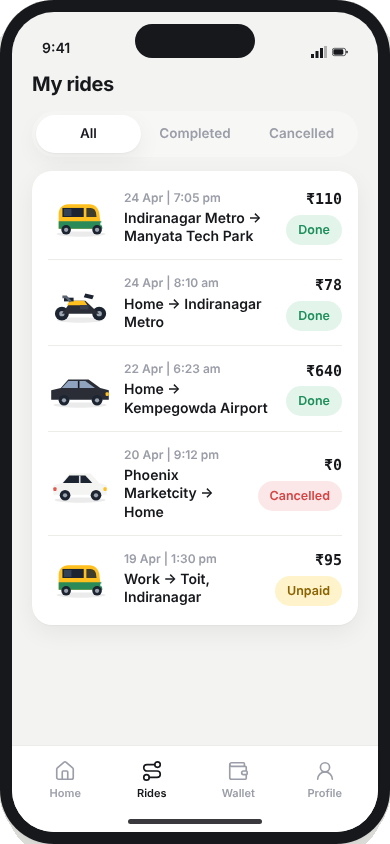
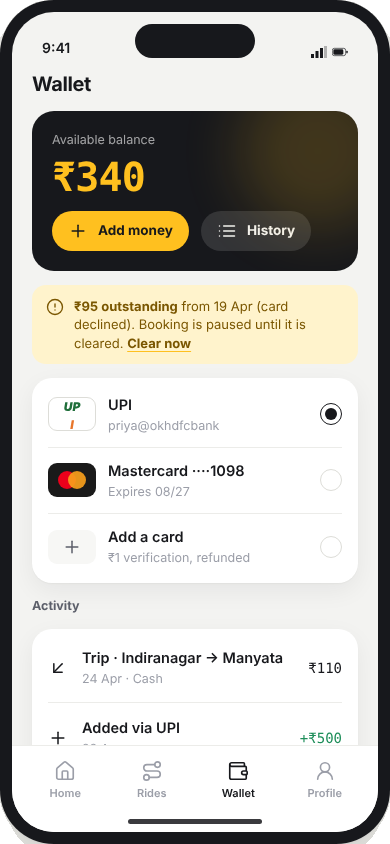
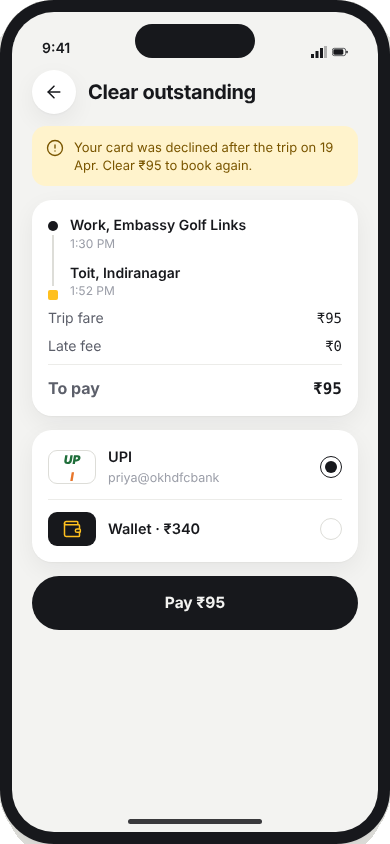
The bill breaks the fare into base fare, distance, time, platform fee and GST, and asks for a rating on the same screen. Ride history, receipts and one-tap rebooking follow, and the wallet handles top-ups, saved cards and any fare left unpaid from a declined card.
What does the driver app do?
Onboarding in three steps
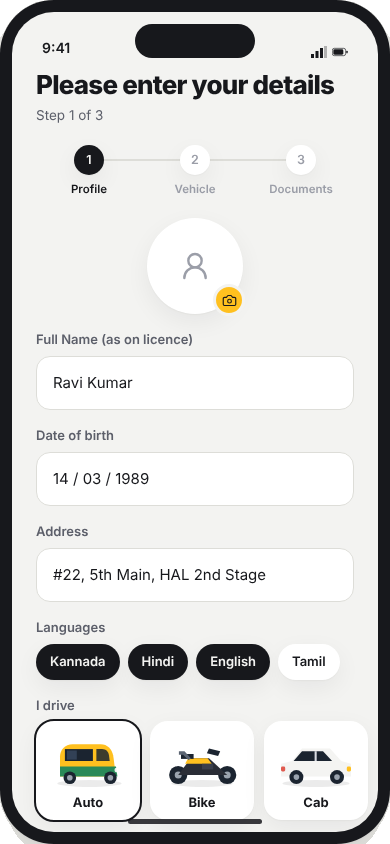
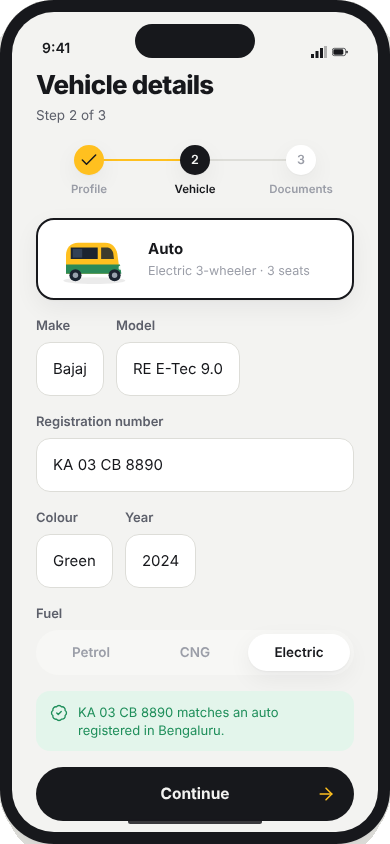
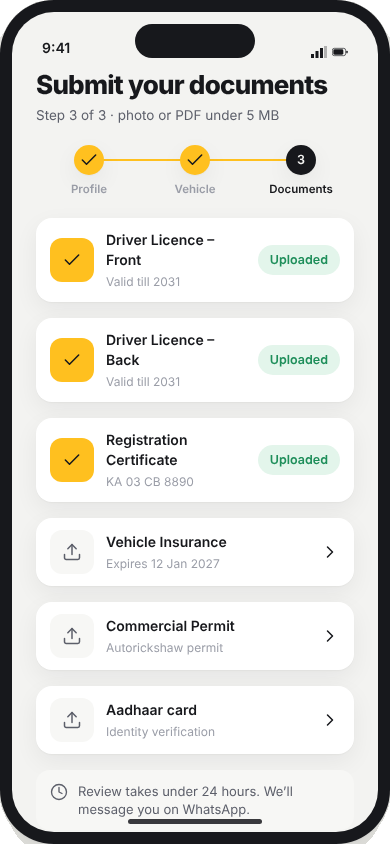
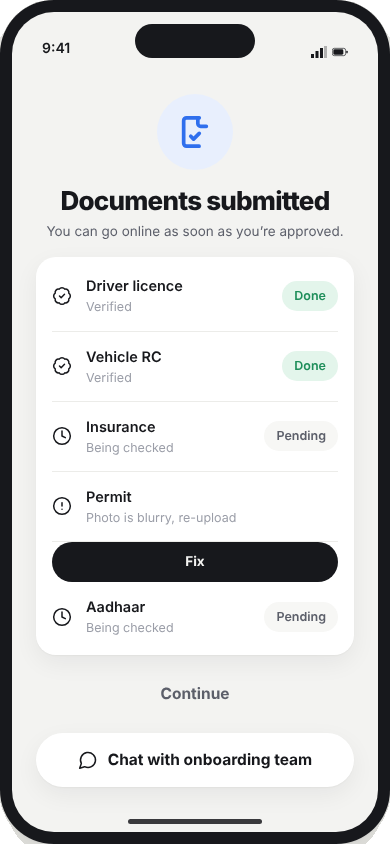
Drivers sign up in three steps: their details and the languages they speak, their vehicle, and their documents. The registration number is checked as they type, documents upload from the camera, and the review screen shows exactly which document needs fixing.
Trips that make sense
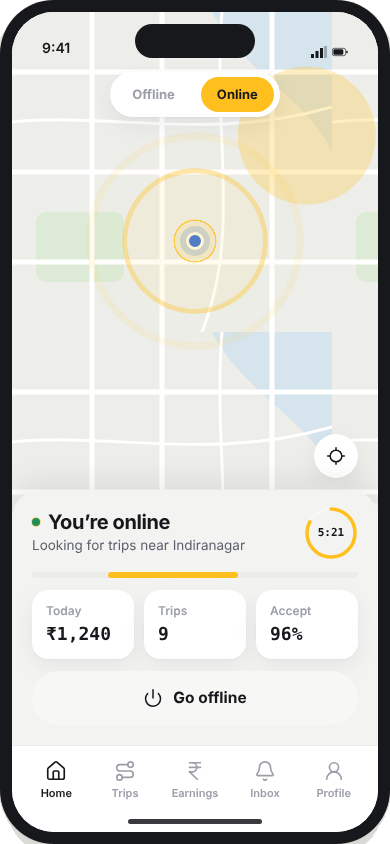
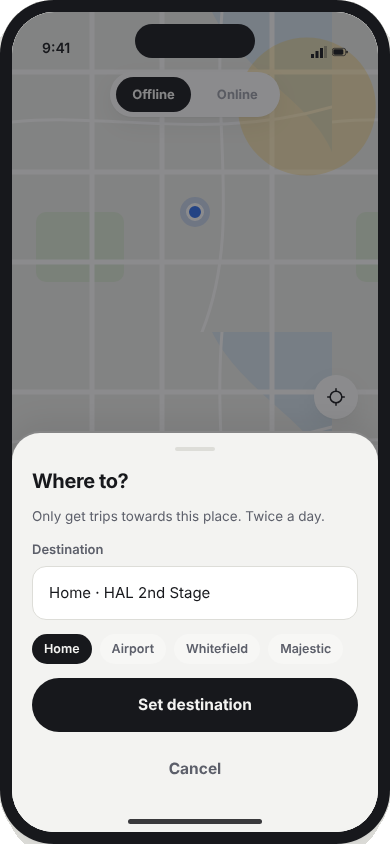
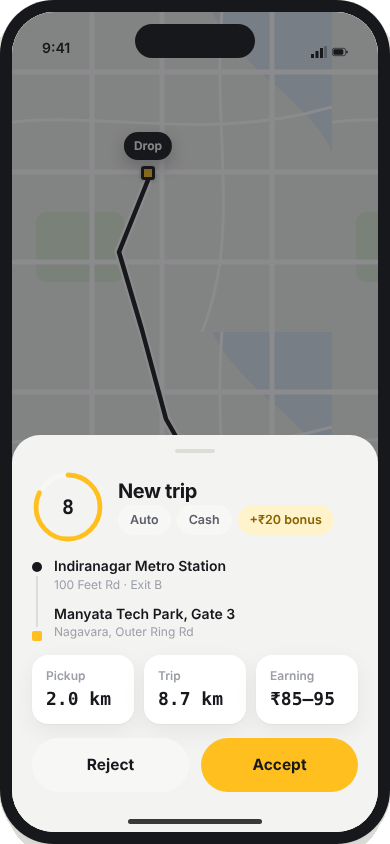
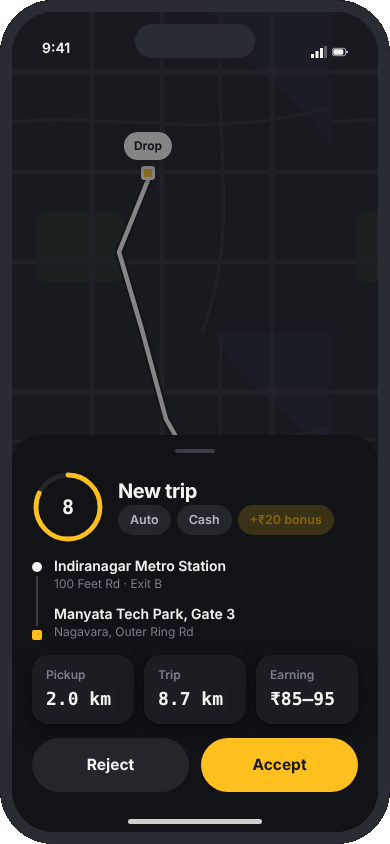
Going online shows today’s earnings, trips and acceptance rate, plus nearby demand and bonus zones. Drivers can set a destination twice a day to get trips heading home. Every trip request shows the pickup distance, trip length and expected earning before they accept.
From pickup to payment
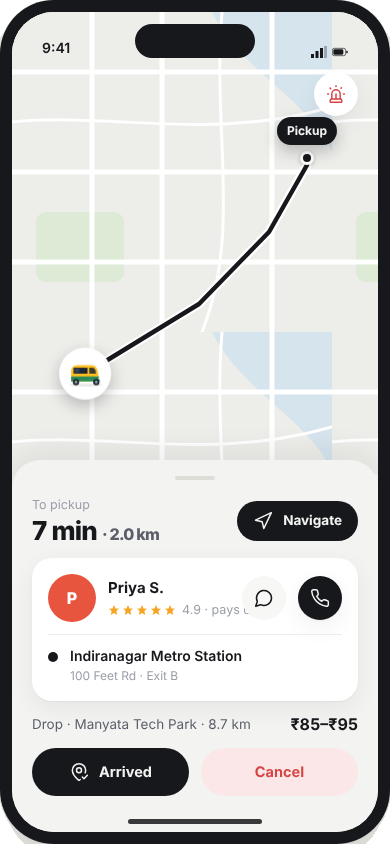
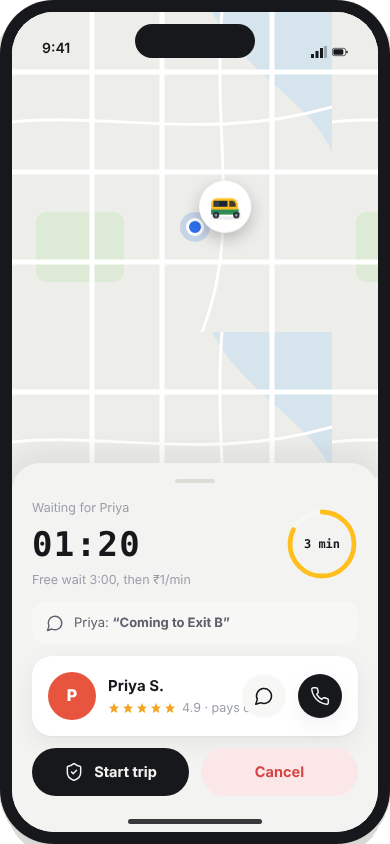
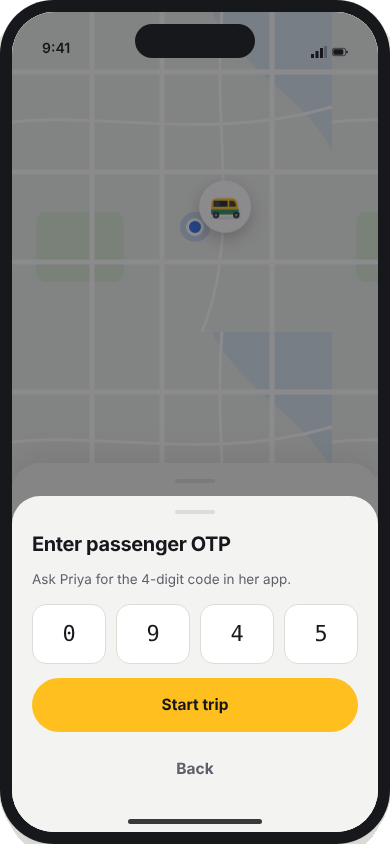
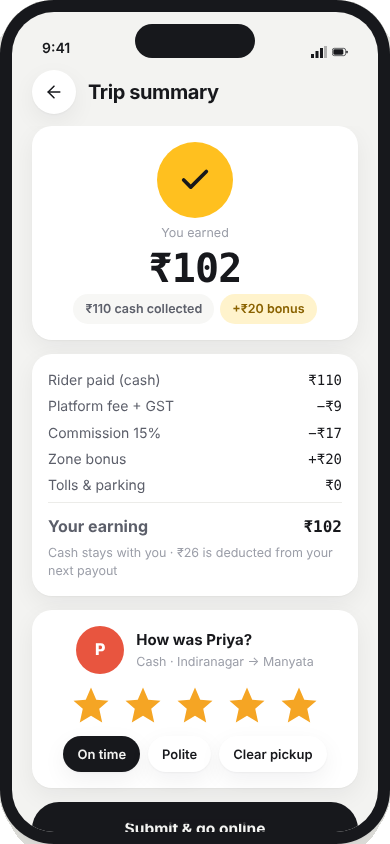
Navigation to pickup, a waiting timer that shows when paid waiting starts, the rider’s start code, then the drop. At the end the driver collects cash or sees the UPI payment, and the trip summary shows exactly how the earning was worked out: fare, platform fee, commission and bonus.
Earnings and payouts
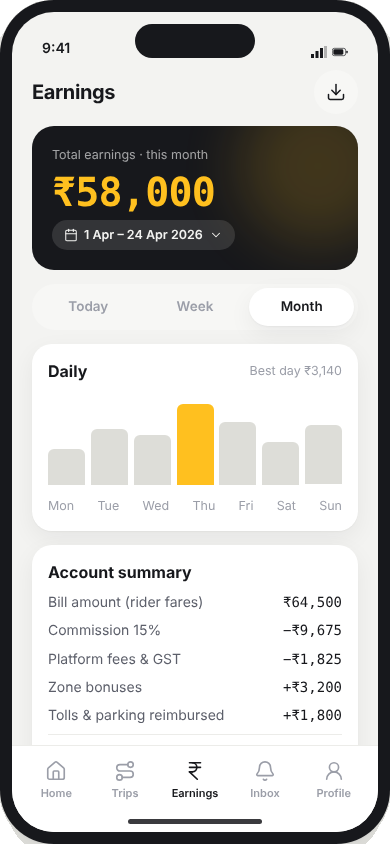
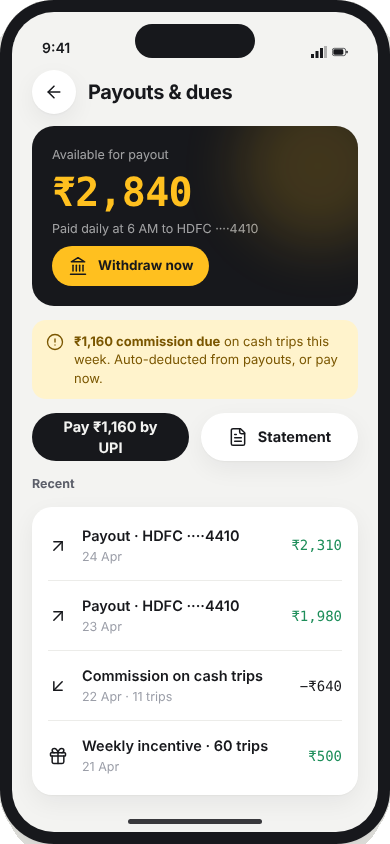
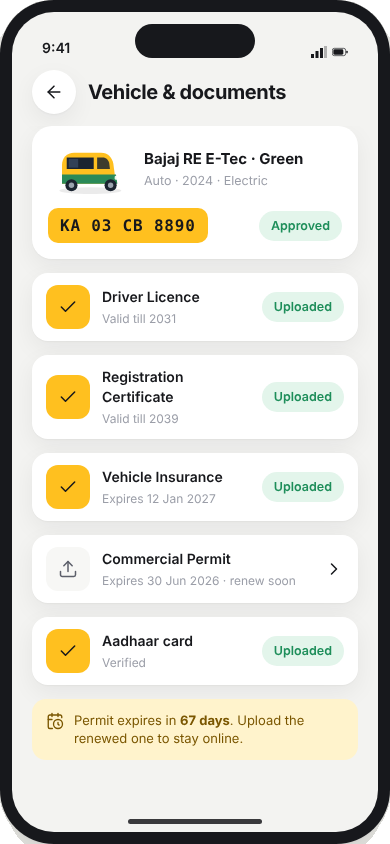
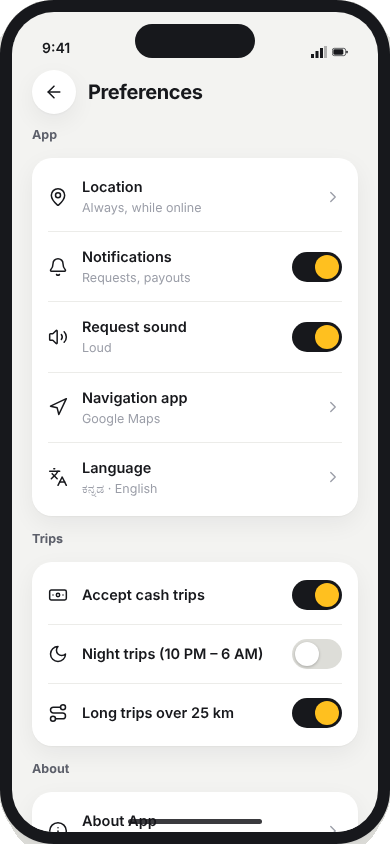
Earnings by day, week and month, with an account summary of fares, commission, fees and bonuses. Payouts go to the bank daily, and commission owed on cash trips is settled automatically from the next payout. Document expiry reminders keep drivers on the road, and preferences let them choose cash trips, night trips and long trips.
Design
One yellow accent on a calm, neutral base, so the next action is always obvious. Fares, codes and timers use a monospaced type that is easy to read at a glance. Every screen in both apps comes in light and dark themes.
What this concept covers
Two apps and 75 screens, each in light and dark. For riders: sign-up and login, booking, live trips, safety, payments and wallet, ride history, referrals and support. For drivers: onboarding, trips, earnings, payouts, documents and preferences.
Questions about this concept
Can you build a ride-hailing app like Uber or Ola?
Yes. This concept covers what riders and drivers expect from apps like these: booking autos, bikes and cabs, live trips, safety tools, wallets and driver payouts. We build it in your brand, for your cities and your fares.
What does a ride-hailing platform need?
A rider app, a driver app and the systems behind them: driver onboarding and document checks, fares, trip matching, payments and payouts, and support. This concept covers both apps end to end.
Have you built ride-hailing platforms before?
Yes. We built ride-hailing platforms for Africar in Nigeria and Baayu in India, under a Build, Operate and Transfer model.
Which payment methods can riders use?
The concept supports cash, UPI, an in-app wallet and cards, with promo codes and a way to clear fares left unpaid. We connect the payment gateway you choose.
Can you run the platform for us after launch?
Yes. We can build it, run it in production while you grow, and hand it over to your own team when you are ready.
How long does it take to launch?
Less time than a build from scratch, because the product is already designed. We confirm the timeline after a short workshop on your cities, vehicles and fares.
