Chat-first apps: when ordering by conversation beats scrolling a catalogue
When a short conversation helps people decide faster than a catalogue, when it does not, and how to design a chat-first app that people trust.

Short answer: a chat-first app works best when people know roughly what they want but not where to get it, when there are constraints to juggle such as time, budget, diet or location, and when a short conversation saves a lot of tapping and scrolling. Keep a classic browse mode for people who like to scroll, and let them switch at any time.
Why now
AI language models can now understand a request like "dosa, as soon as possible, nothing too spicy" and turn it into a real search with real constraints. That makes conversation a practical way to order, book and buy, not just a support channel.
When chat wins
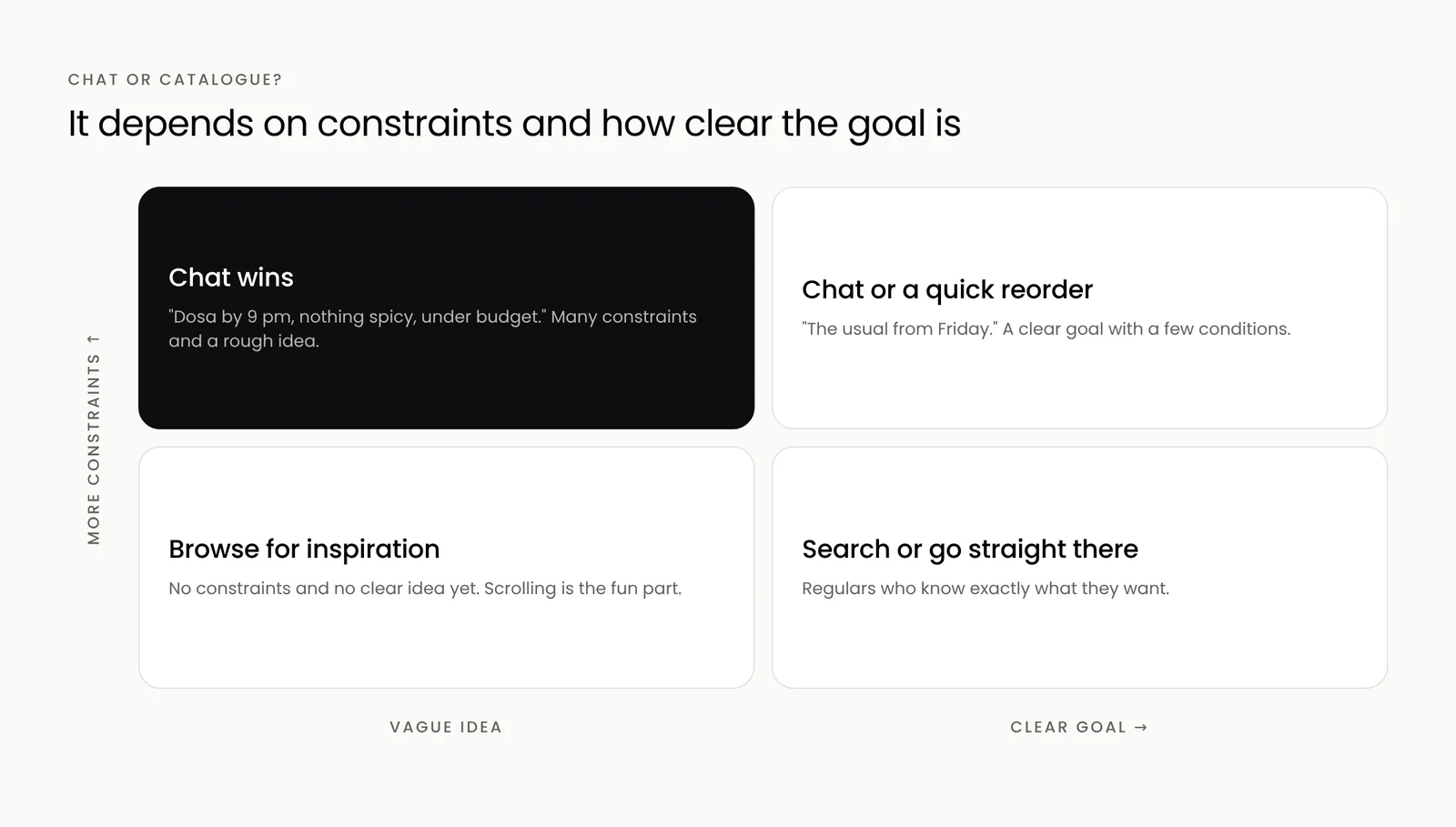
- Constraints. "By 9 pm", "under a budget", "vegetarian", "near the office". Chat handles several at once.
- A vague idea. "Something light" is easy to say and hard to find by scrolling.
- Repeat orders. "The usual from last Friday" is one message.
- Voice and languages. People can speak, in the language they think in.
When the catalogue wins
- Browsing for inspiration, when people do not know what they want yet.
- Comparing many visual options, such as clothes or homes.
- Regulars who know exactly where they want to go.
Design principles for chat-first apps
- Ask one thing at a time, with quick-reply chips for the common answers.
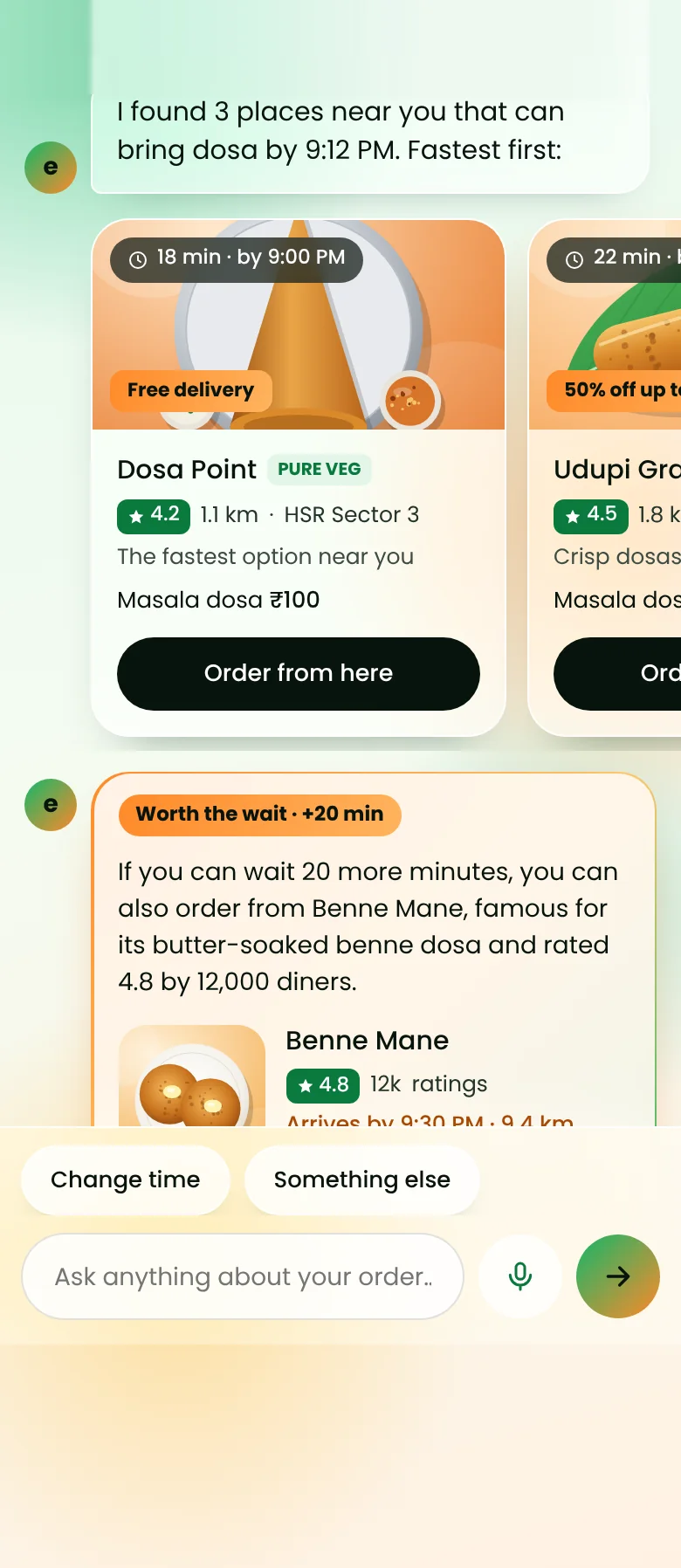
- Show real options early: cards with photos, prices and times, not paragraphs of text.
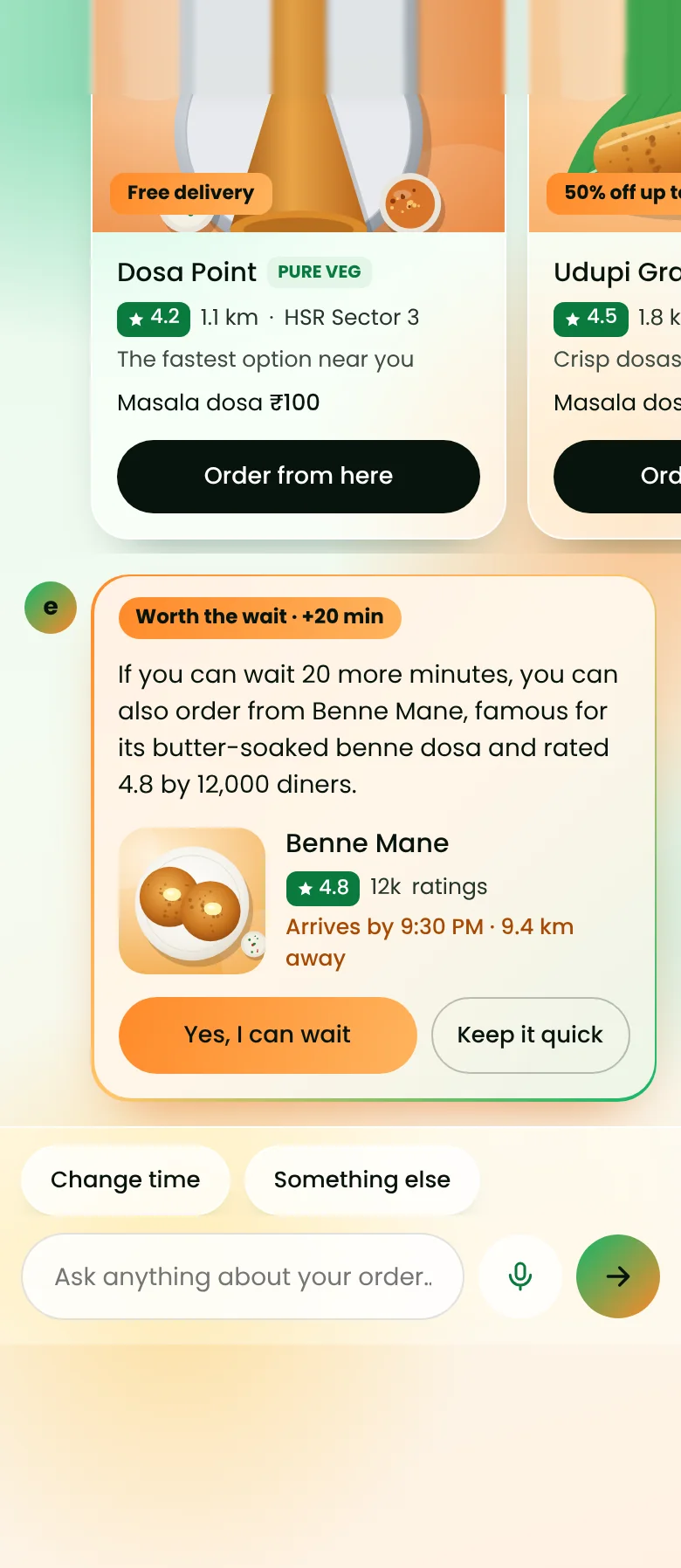
- Explain the choice: "fastest first" or "worth the wait", so people trust the ranking.
- Confirm before money moves, with a clear summary.
- Keep browse one tap away, and let people switch without losing their place.
- Fail gracefully when the assistant does not understand, by offering choices.
How Eatato does it
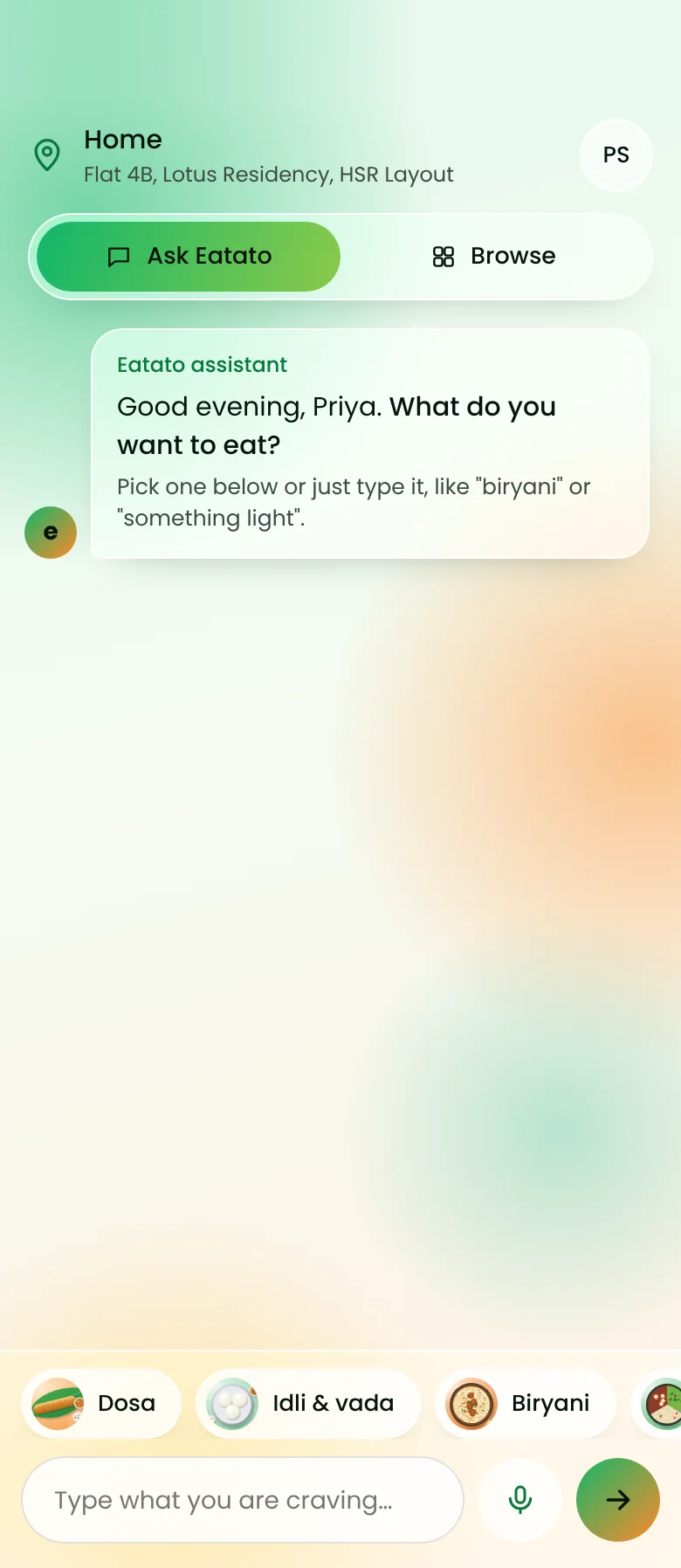
Our Eatato food delivery concept is chat-first. It asks what you want to eat and how soon, shows only the places that can deliver in time, and suggests a famous place nearby when waiting 20 minutes more is worth it. Dishes, "this restaurant also has" suggestions and the order summary all appear in the chat, and the classic browse mode with a veg-only filter is one tap away.
How to know it is working
Measure how long it takes to go from opening the app to a paid order, how often people switch to browse, how often the assistant's first suggestion is chosen, and repeat orders. A good chat-first flow should be faster for the people who use it, not just novel.
Try the Eatato live demo or talk to us about a chat-first experience for your product.
Frequently asked questions
Will people actually use chat to order?
Many will, when the chat is faster than scrolling, for example when they have a time limit, a budget or a dietary need. Keep a browse mode for those who prefer it.
Does a chat-first app need AI?
To understand free-text requests, yes. Quick-reply chips can handle the most common answers without AI, which keeps it fast and affordable.
What happens when the assistant does not understand?
A good chat-first app offers choices instead of guessing, and lets people switch to the browse mode without losing what they have already chosen.


