How much does it cost to build a food delivery app like Swiggy in India?
Food delivery is four apps in one. What drives the cost, what to launch first, the running costs and the timeline, with our Eatato concept.

Short answer: food delivery is four products in one: customer, restaurant, rider and admin apps, joined by dispatch, live tracking and payments. The cost depends mostly on how many of those you launch, how many cities and restaurants you start with, and the integrations you need. Our Eatato concept takes about 16 weeks to build. We give a fixed quote after a short workshop.
What you are paying for
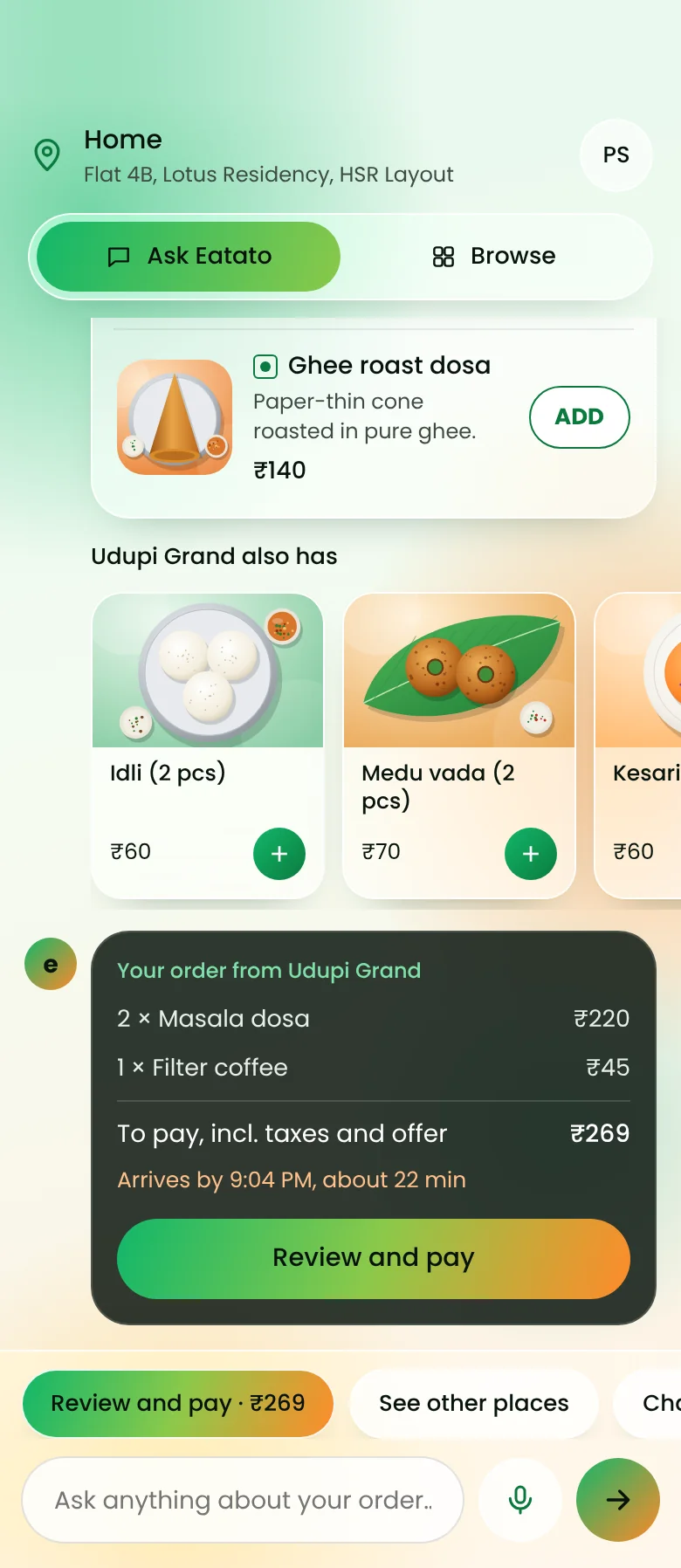
- The customer app: ordering by chat or by browsing, checkout with UPI, live tracking and ratings.
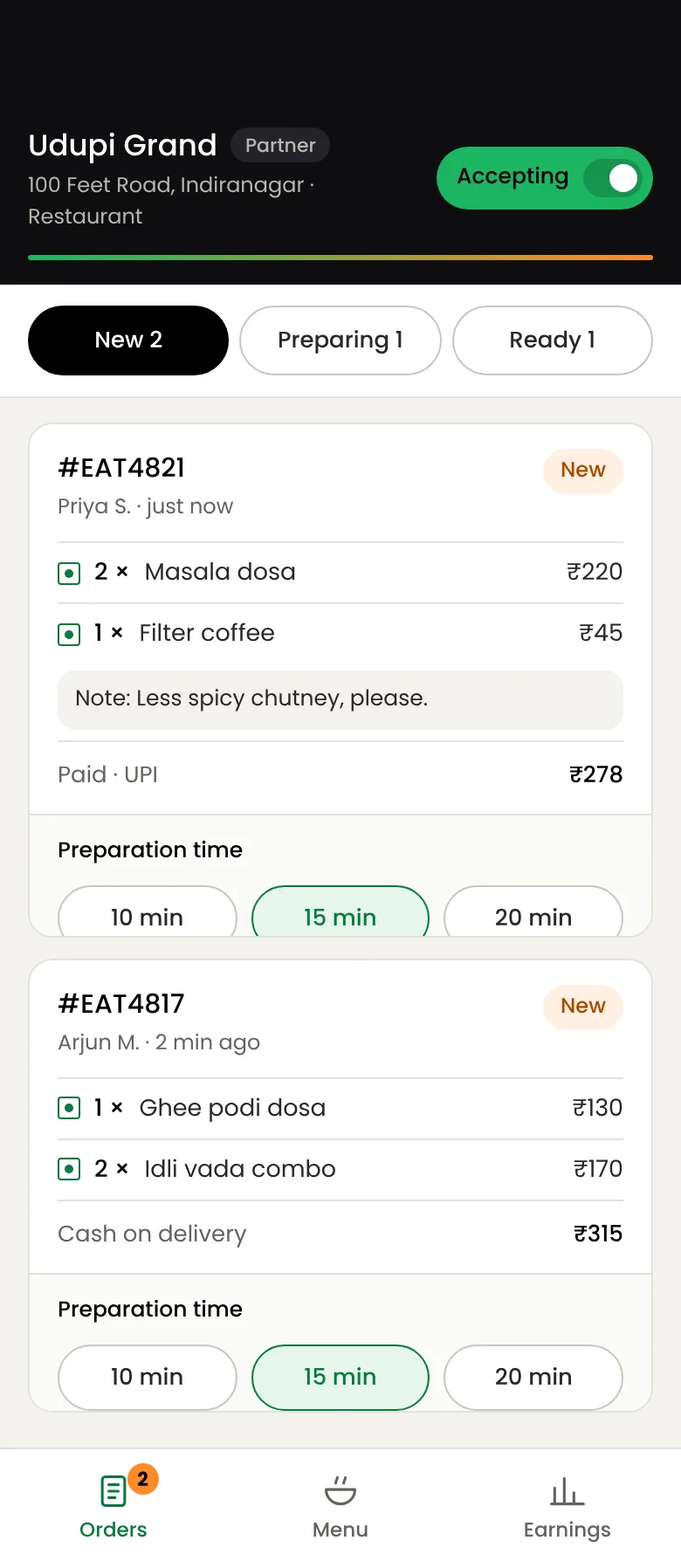
- The store app: new orders, prep times, kitchen tickets, hand-over to riders, menus and stock.
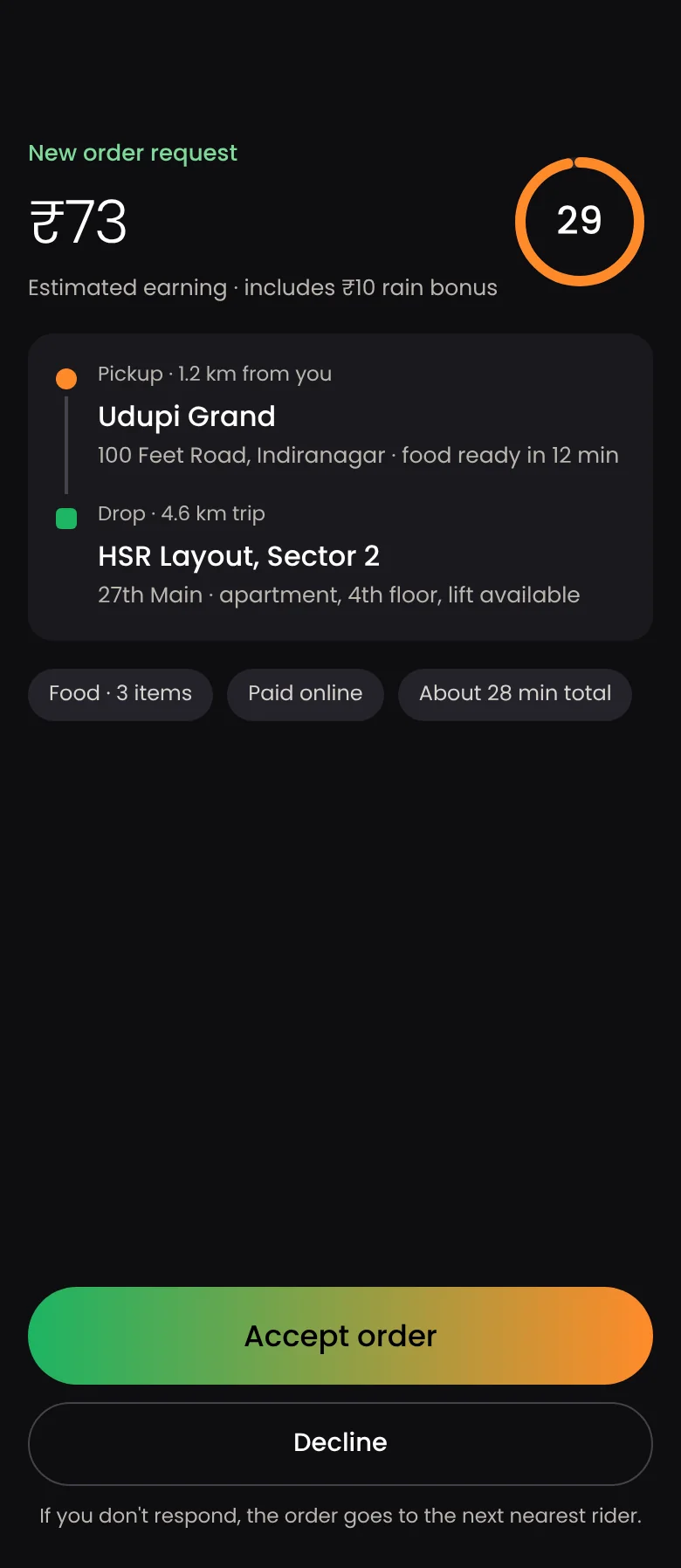
- The rider app: job offers, navigation to pick-up and drop, pick-up checklists, delivery OTPs and earnings.
- The admin console: live orders, dispatch, restaurants, riders, payouts and support.
What drives the cost
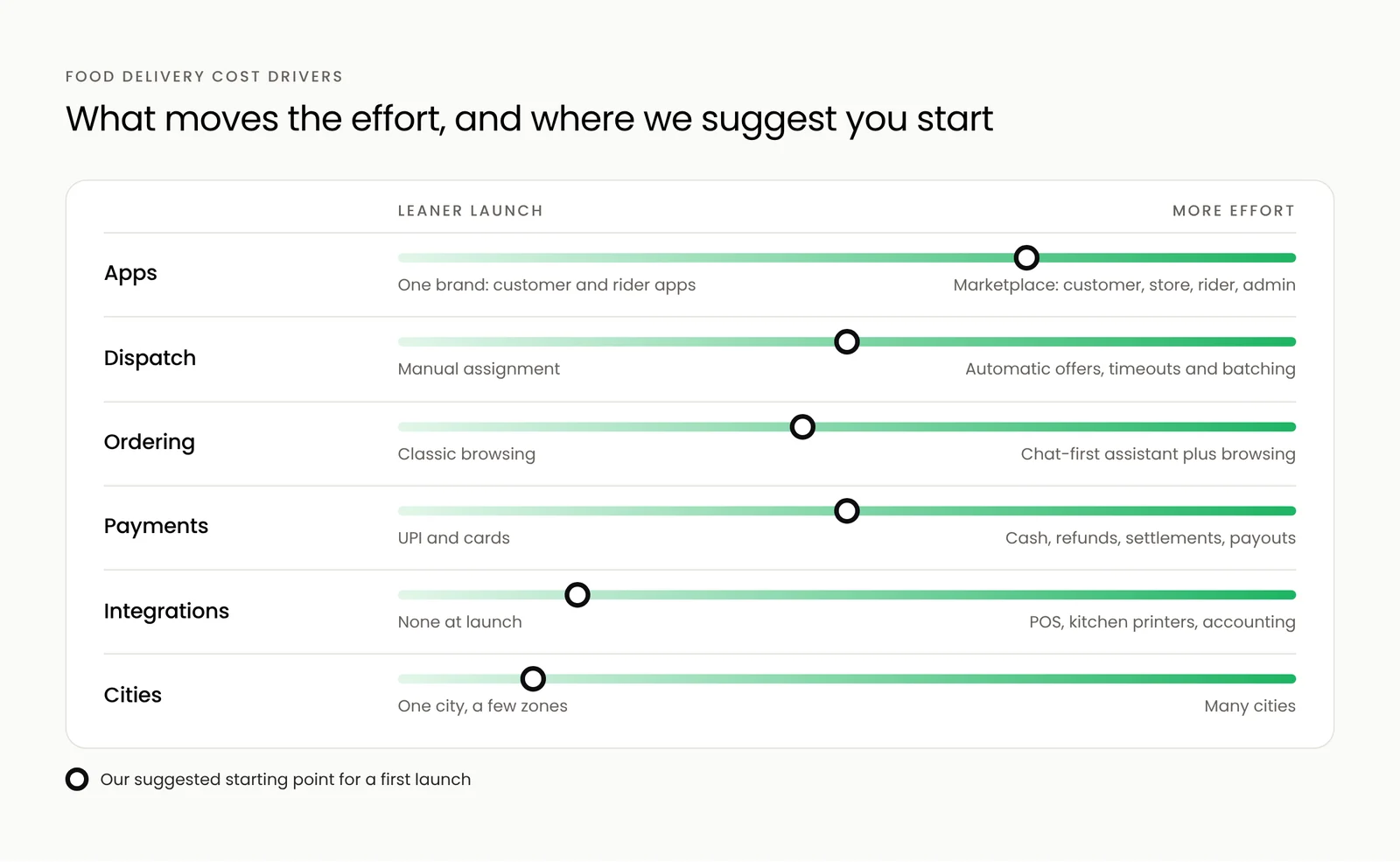
- Number of apps. Customer, store, rider and admin are the minimum for a marketplace. A single restaurant brand can skip some.
- Dispatch. Offering each order to the best rider nearby, with timeouts, batching and manual override, is the heart of the platform.
- Live tracking. Location updates, maps and arrival times for every order.
- Payments. UPI, cards, cash on delivery, refunds, restaurant settlements and rider payouts.
- The ordering experience. A chat-first assistant that understands cravings and time limits, alongside classic browsing with dish photos and veg filters.
- Integrations. Restaurant POS systems, kitchen printers, accounting and marketing tools.
- Cities and zones. Each city adds zones, delivery fees, restaurants and riders to onboard.
How Eatato keeps the build lean
Eatato reuses modules we have already designed: live tracking from our BobsRide ride-hailing concept and job dispatch from our Findar home services concept. The hardest parts of a delivery platform are designed and tested before your project starts.
What to launch first
- One city, a few zones and restaurants you can onboard well.
- The four apps with the core order flow, UPI checkout, tracking and payouts.
- Add the chat assistant's smarter suggestions, promotions and integrations in phases.
Running costs to plan for
Cloud hosting, maps and routing, SMS for one-time passwords, payment gateway fees, AI usage, app store accounts, support and maintenance, plus the operations cost of onboarding restaurants and riders.
How long it takes
Our plan for Eatato is about 16 weeks: a workshop in week 1, design in your brand in weeks 1 and 2, the customer app and assistant from week 2, the store app from week 3, the rider app from week 4, dispatch, tracking and payments from week 3, the admin console from week 6, testing with real restaurants and riders in weeks 14 and 15, and the store launch in week 16.
Frequently asked questions
How long does it take to build a food delivery app like Swiggy?
About 16 weeks for customer, store and rider apps with an admin console, when you start from a designed product like Eatato.
What apps does a food delivery platform need?
A customer app, a store or restaurant app, a rider app and an admin console, plus a backend for dispatch, live tracking, payments and payouts.
Can a single restaurant brand have its own delivery app?
Yes. A brand or cloud kitchen can launch the customer app with its own store and rider operations, and skip the multi-restaurant marketplace features.


