How much does it cost to build a home services app like Urban Company?
What drives the cost of a home services app, how to keep it down, the running costs to plan for, and how long it takes, with our Findar concept.

Short answer: the cost depends mainly on how many apps you launch (customer, partner and admin), how many services and cities you start with, the AI features you want, and integrations such as payments, maps and background checks. Our Findar concept is designed end to end and takes about 14 weeks to build. We give a fixed quote after a short workshop, once we know your scope.
What you are paying for
A home services platform is three products:
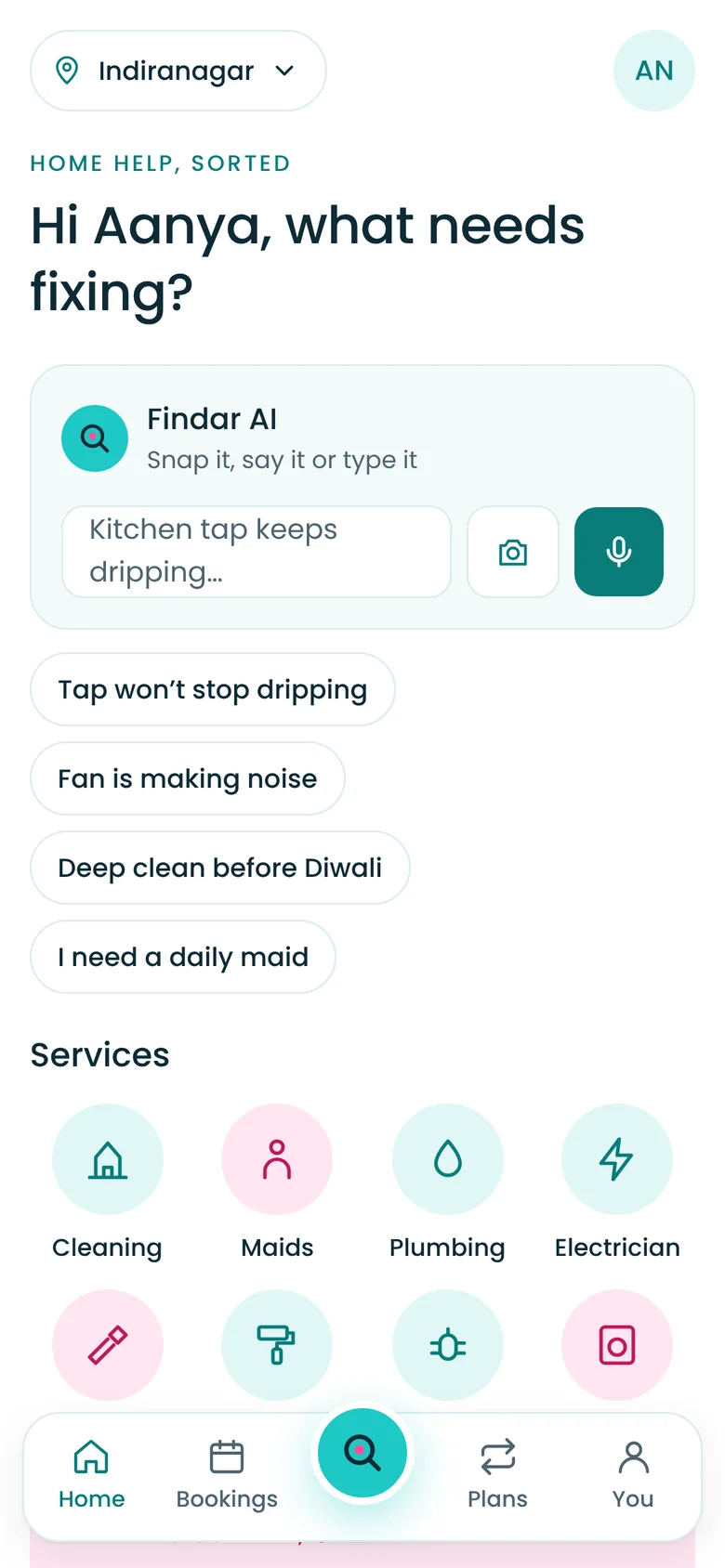
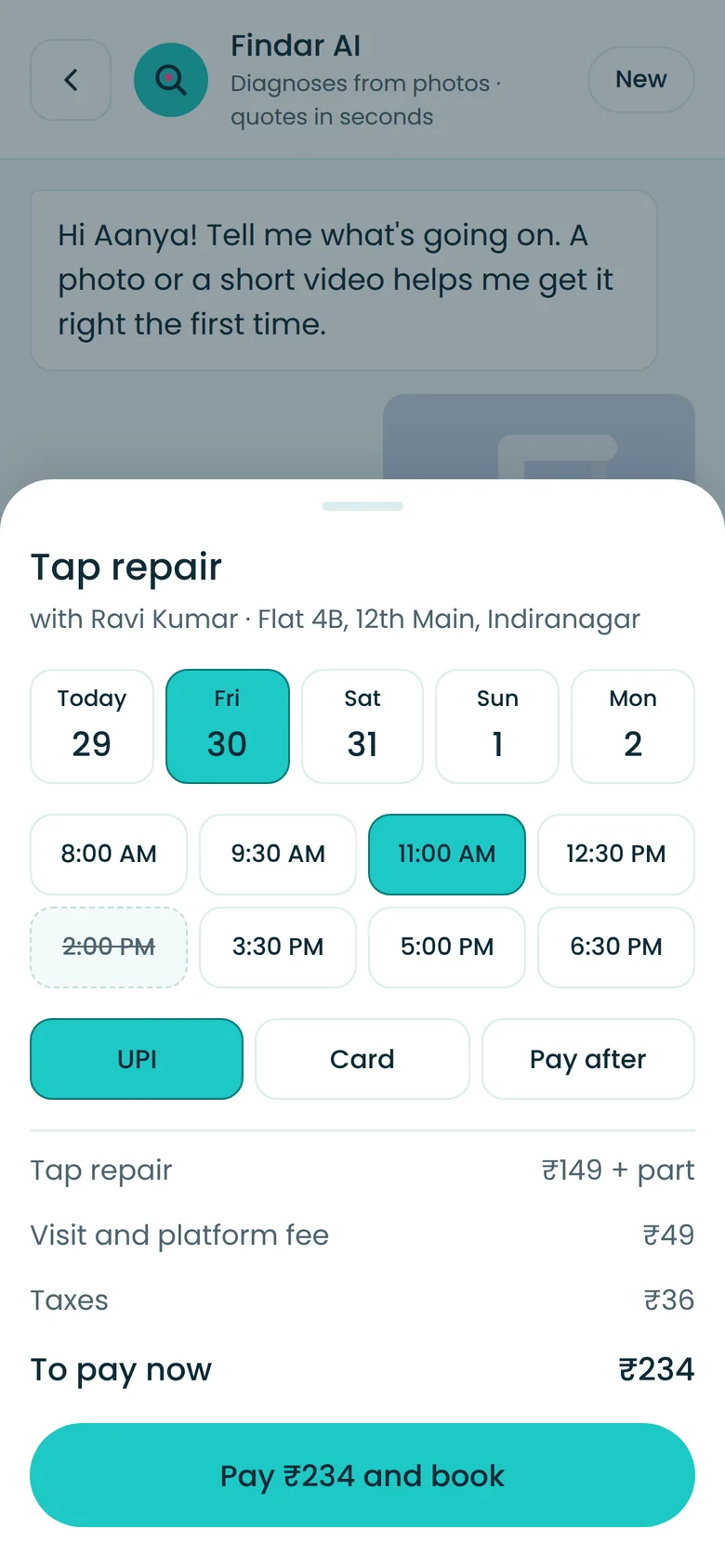
- The customer app: services, prices, booking slots, payment, live tracking, ratings and support.
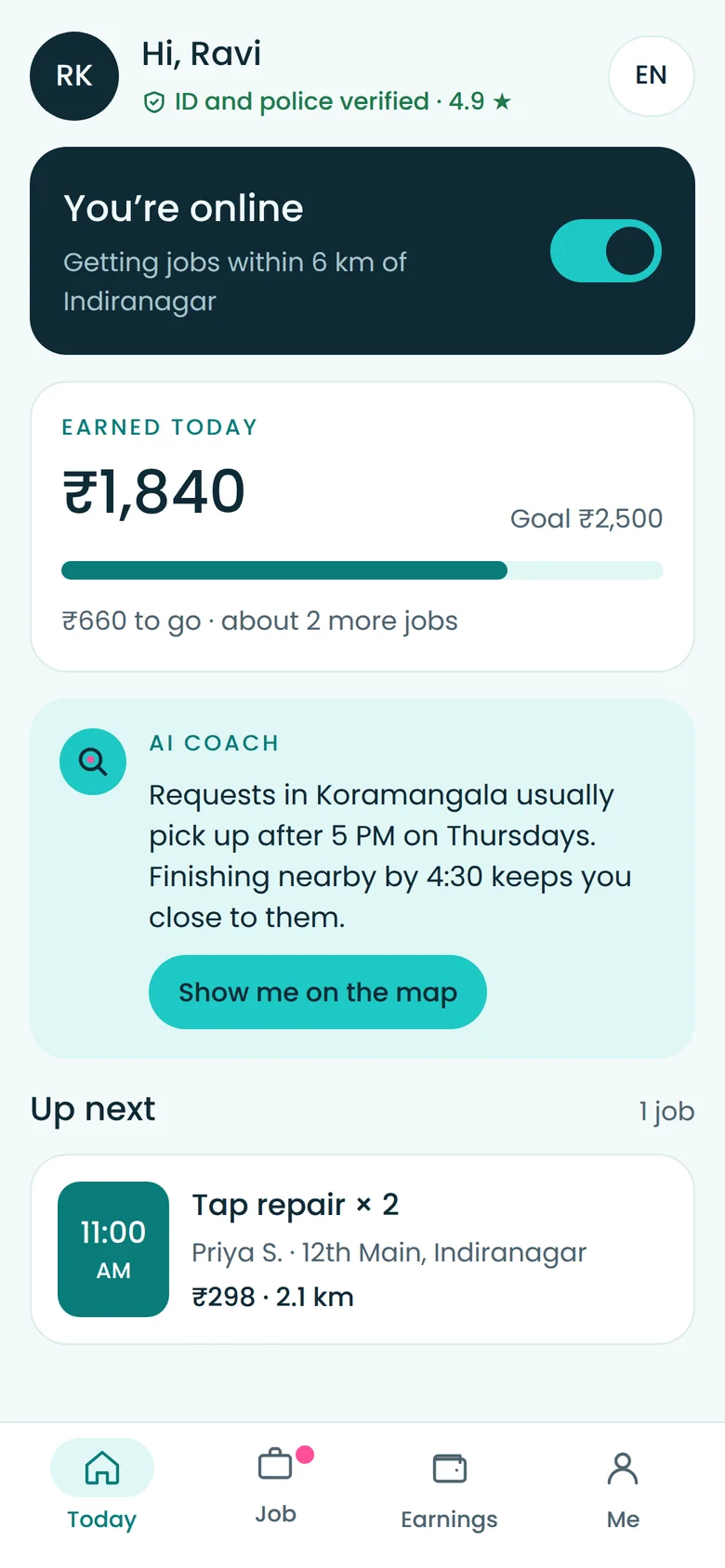
- The partner app: jobs, navigation, start codes, job timers, photos, earnings and training.
- The admin console: partner verification, services and prices, bookings, disputes and payouts.
Behind them sits the backend that schedules jobs, assigns partners, takes payments and pays partners.
What drives the cost
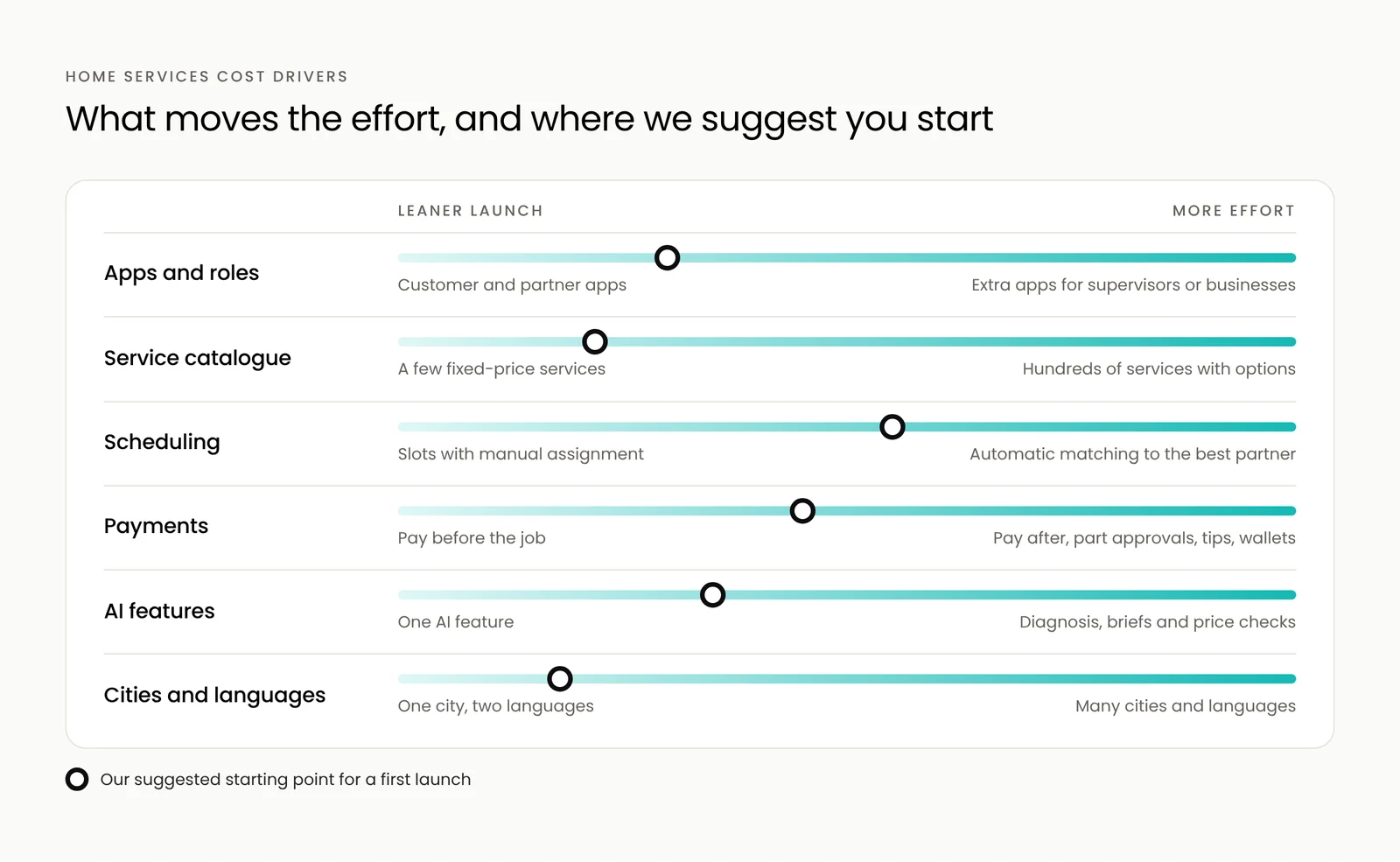
- Number of apps and roles. Customer and partner apps are the minimum; separate apps for supervisors or businesses add more.
- Service catalogue. A few fixed-price services are simpler than hundreds with options, add-ons and quotes after inspection.
- Scheduling and assignment. Slot booking with automatic assignment to the best available partner is more work than manual assignment.
- Payments. Pay before, pay after, part approvals, tips, wallets and partner payouts each add work.
- AI features. Findar AI diagnoses problems from photos, briefs partners in their language and checks prices. Each feature can be phased in.
- Trust and safety. ID and police verification, start codes, SOS and re-work guarantees.
- Cities and languages. More cities mean more zones, prices and partners; more languages mean more translation and testing.
How to keep the cost down
- Start with one city and a handful of services, then expand.
- Start from a designed product. Findar's screens, flows and AI features are already designed.
- Use one codebase for iOS and Android.
- Phase the AI features, starting with the one that removes the most friction.
- Build with AI-native development, which speeds up the build without cutting corners on review and testing.
Running costs to plan for
Beyond the build, plan for cloud hosting, maps and routing, SMS for one-time passwords, payment gateway fees, AI usage, app store accounts, and maintenance as operating systems and devices change.
How long it takes
Our plan for Findar is about 14 weeks: a workshop in week 1, design in your brand in weeks 1 and 2, the customer app from week 2 and the partner app from week 3, Findar AI from week 4, the backend, payments and admin console through week 11, testing with real partners in weeks 12 and 13, and the store launch in week 14.
Frequently asked questions
How long does it take to build an app like Urban Company?
About 14 weeks for a customer app, a partner app and an admin console when you start from a designed product like Findar. We confirm the timeline after a workshop.
What affects the cost of a home services app the most?
The number of apps, the size of the service catalogue, scheduling and assignment, payment options, AI features, verification and the number of cities and languages at launch.
Can we launch with a few services and add more later?
Yes, and it is the best way to start. Launch in one city with a handful of services, learn from real bookings, then add services and cities.


