GEO explained: how to get your website cited by ChatGPT, Gemini and Perplexity
Generative engine optimisation in plain words: how AI answer engines choose sources, and five steps to get your website found, understood and cited.

Short answer: generative engine optimisation (GEO) means making your website easy for AI answer engines to find, understand and cite. It starts with ordinary search: AI engines mostly draw on search indexes, so get your pages indexed by Google and Bing first, then publish specific pages that answer real questions, make it obvious who you are, and earn mentions on other trusted sites.
How AI answers choose their sources
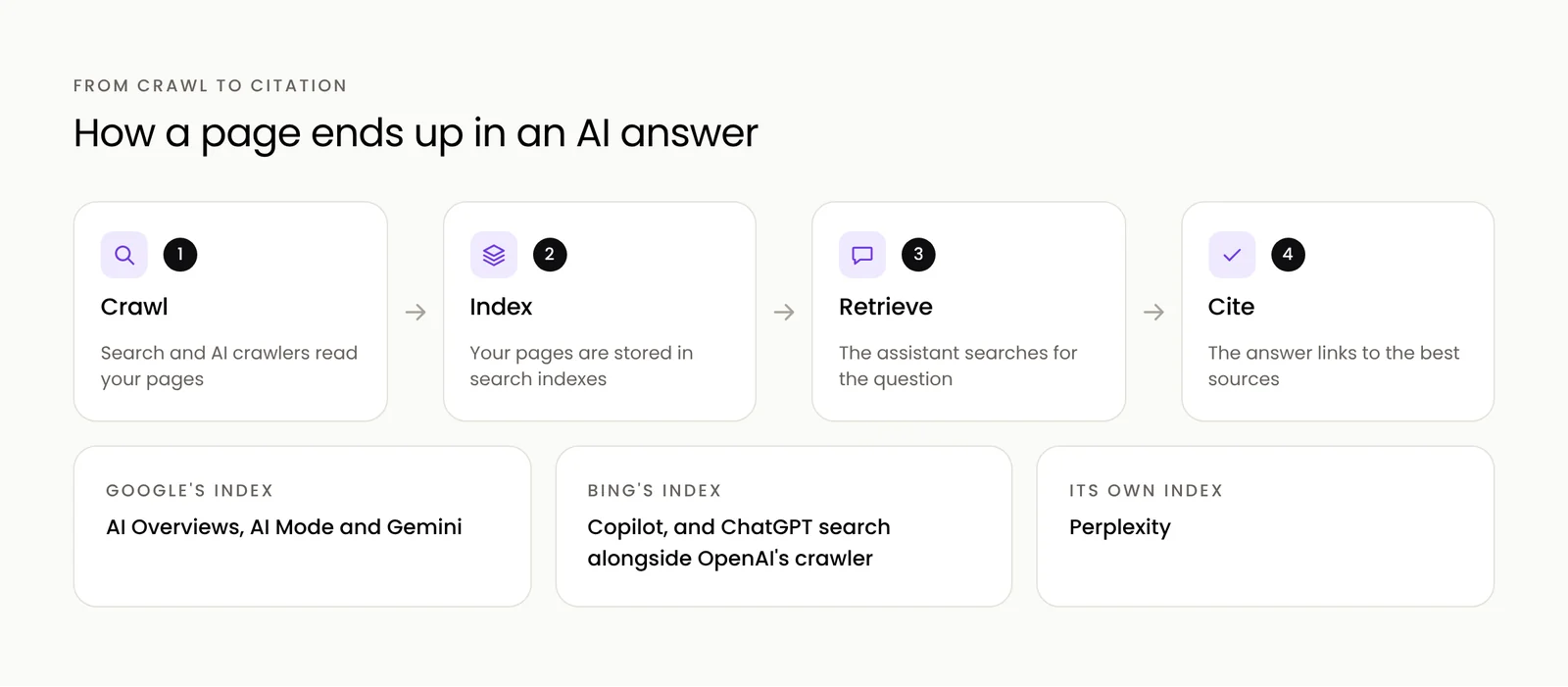
When someone asks an AI assistant a question that needs fresh information, it searches, reads a handful of pages and writes an answer that cites some of them. Which index it searches matters:
- Google's index feeds AI Overviews, AI Mode and Gemini.
- Bing's index feeds Microsoft Copilot, and ChatGPT search also draws on it alongside OpenAI's own crawler.
- Perplexity runs its own crawler and index.
If your pages are not in these indexes, no amount of clever writing will get them cited.
Step 1: be crawlable and indexed
- Allow the crawlers in robots.txt, including the AI search crawlers such as OAI-SearchBot and PerplexityBot.
- Submit your sitemap in Google Search Console and Bing Webmaster Tools.
- Ping search engines when pages change with IndexNow, which Bing supports.
- Serve real HTML. Some AI crawlers do not run JavaScript, so key content should be in the page's HTML, not loaded later by scripts.
Step 2: make it obvious who you are
AI engines need to be sure which company you are, especially if your name is shared with other things.
- Use the same name, one-line description, address and phone number on your website, LinkedIn, Google Business Profile and directories.
- Add structured data for your organisation, with links to your official profiles.
- Keep facts such as your founding year and services consistent everywhere.
Step 3: answer real questions, specifically
AI engines cite pages that answer a question directly and add something specific. Google's own guidance for its AI features, published in May 2026, comes down to useful, original content on a technically sound site; it says special files such as llms.txt are not needed for Google.
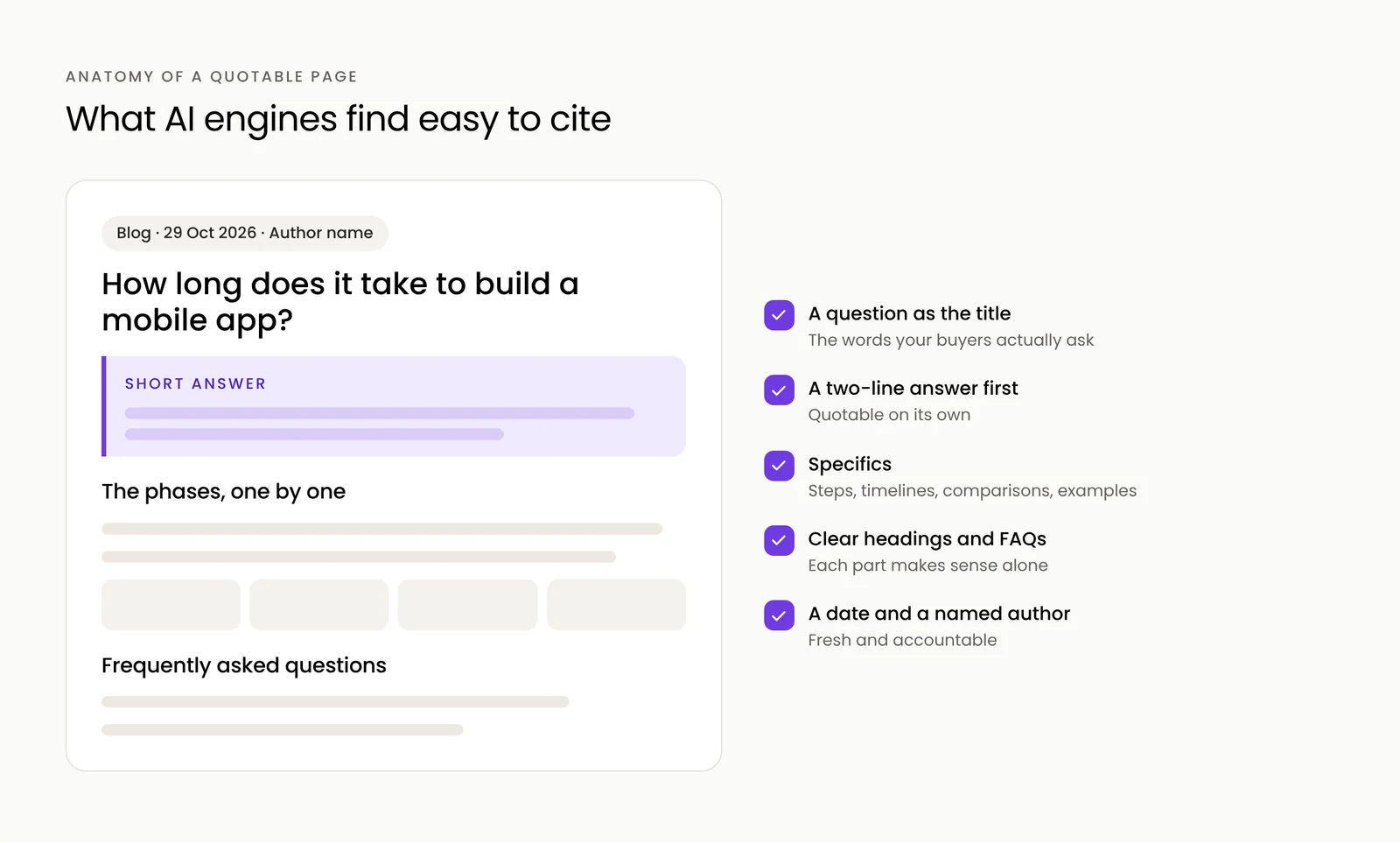
- Put a two-line answer at the top of the page.
- Add specifics: steps, timelines, comparisons, examples and your own experience.
- Use clear headings and FAQs, so each part can be quoted on its own.
- Update pages when facts change, and show the date.
Step 4: earn mentions
AI assistants recommend companies that other sites talk about: client reviews, industry directories, "best of" lists, news and interviews. Earn them honestly. Fake reviews and paid mentions put your reputation at risk, and Google warns against seeking inauthentic mentions.
Step 5: measure it
- Google Search Console shows how your pages perform in Google Search, including its AI features.
- Bing Webmaster Tools' AI Performance report, launched in preview in February 2026, shows when Copilot cites your pages.
- A monthly check of the 20 questions your buyers ask, in the main AI assistants, shows whether you appear and who appears instead.
How long it takes
Once a site is indexed, new pages can start appearing in AI answers within days. Being recommended for "best company for X" questions takes longer, because it depends on reviews and mentions built over months.
Humanoid Systems builds fast, well-structured websites and helps teams get found in search and AI answers. Ask us to review your site.
Frequently asked questions
Is GEO different from SEO?
GEO builds on SEO. AI answer engines mostly draw on search indexes, so technical SEO still comes first. GEO adds a focus on clear, specific, quotable answers, a well-defined brand identity and mentions on other trusted sites.
Do I need an llms.txt file?
Google says it does not need llms.txt for its AI features. The file is harmless and some tools read it, but it is not a substitute for being indexed and publishing useful pages.
How long does GEO take to work?
Indexing and first citations for new pages can happen within days to weeks. Appearing in recommendations for competitive questions usually takes months of reviews, mentions and useful content.


