Build, operate, transfer: launching a tech platform without hiring a team first
How the build, operate and transfer model works for apps and platforms, when it makes sense, and what to agree before you start.

Short answer: in a build, operate and transfer (BOT) model, a technology partner builds your platform, runs it for an agreed period while it grows, then hands over the code, the infrastructure and the know-how to your own team. It lets you launch quickly without hiring a full technology team on day one. We have used this model to build ride-hailing platforms for Africar in Nigeria and Baayu in India.
The three phases
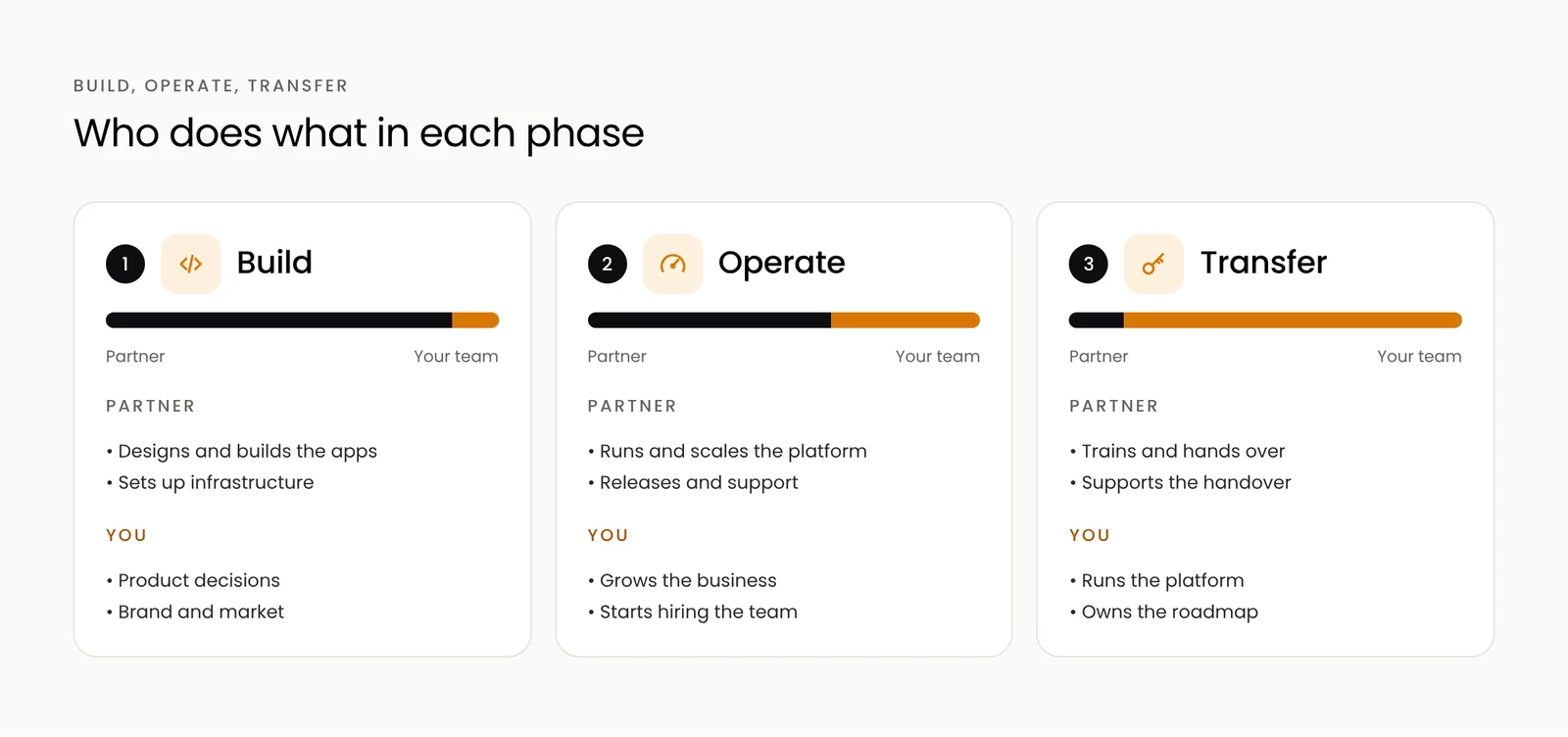
Build
The partner designs and builds the platform: the apps, the backend, the admin console and the infrastructure. You own the product decisions and the brand.
Operate
The partner runs the platform in production while your business grows: releases, monitoring, fixes, scaling, support for your operations team, and improvements based on real use. This is where most of the learning happens.
Transfer
Your own team takes over. The partner helps you hire, trains your engineers, hands over the code, infrastructure, documentation and accounts, and supports the team through a handover period.
When BOT makes sense
- You need to launch before you can hire. Building a strong technology team takes months. BOT puts a working platform in the market first.
- Technology is core to your business in the long run. You want to own and run it eventually, not rent it forever.
- You are entering a new market. A partner who has run similar platforms reduces the risk of the first year.
- Operations are complex. Real-time platforms such as ride-hailing or delivery need people who have run them in production.
What to agree up front
- The scope of each phase and how long the operate phase lasts.
- Service levels during operate: uptime, response times and who is on call.
- Transfer criteria: what "ready to hand over" means, such as a hired team, documentation and a period of shadowing.
- Ownership: code, designs, accounts and data belong to you from the start, not only at transfer.
- Knowledge transfer: training, pairing and documentation, with time set aside for it.
- Costs for each phase, including how the operate phase is priced.
BOT compared with the alternatives
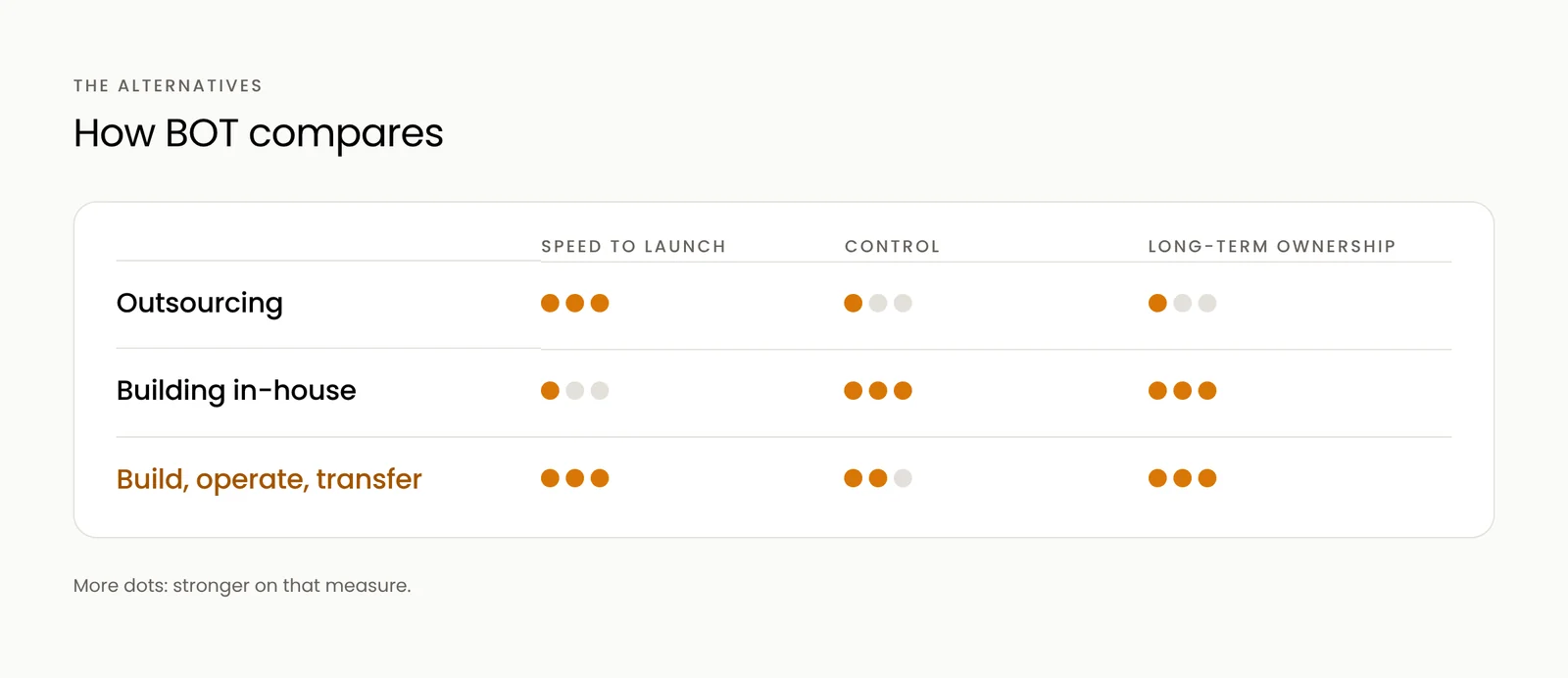
- Outsourcing gets you to launch quickly, but you may depend on the vendor forever.
- Building in-house gives you full control, but hiring takes time and the first version arrives later.
- BOT combines a fast launch with full ownership at the end, at the cost of planning the handover carefully.
What we learned running ride-hailing platforms
Ride-hailing is one of the hardest products to operate: real-time dispatch, live tracking, payments, driver onboarding and support, all at once. Building, operating and transferring platforms for Africar and Baayu taught us that the operate phase is where a platform becomes reliable, and that the transfer works best when the client's team joins early rather than at the end. That experience is packaged in our BobsRide ride-hailing concept.
Talk to us about launching your platform on a build, operate and transfer model.
Frequently asked questions
How long does the operate phase usually last?
It depends on how quickly the platform grows and how quickly you can hire. Agree a period up front, with clear transfer criteria, and review it as the business develops.
Who owns the platform during a BOT project?
You should own the code, designs, accounts and data from the start. The partner operates the platform on your behalf, and the transfer moves the day-to-day work to your team.
Is BOT more expensive than outsourcing?
The build costs are similar. BOT adds the cost of operating the platform and of a structured handover, in exchange for owning and running the platform yourself in the long run.


