How to build a dating app like Hinge or Bumble: features, safety and making money
The features a dating app needs, how to keep people safe, how it earns, and how long it takes to build, with our Venus concept as the example.

Short answer: a dating app needs rich profiles, a way to discover people, likes and matches, chat, strong safety tools, an admin console for moderation and a subscription that pays for it all. Our Venus concept has all of this designed end to end, and takes about 10 weeks to launch on the App Store and Google Play.
The core loop
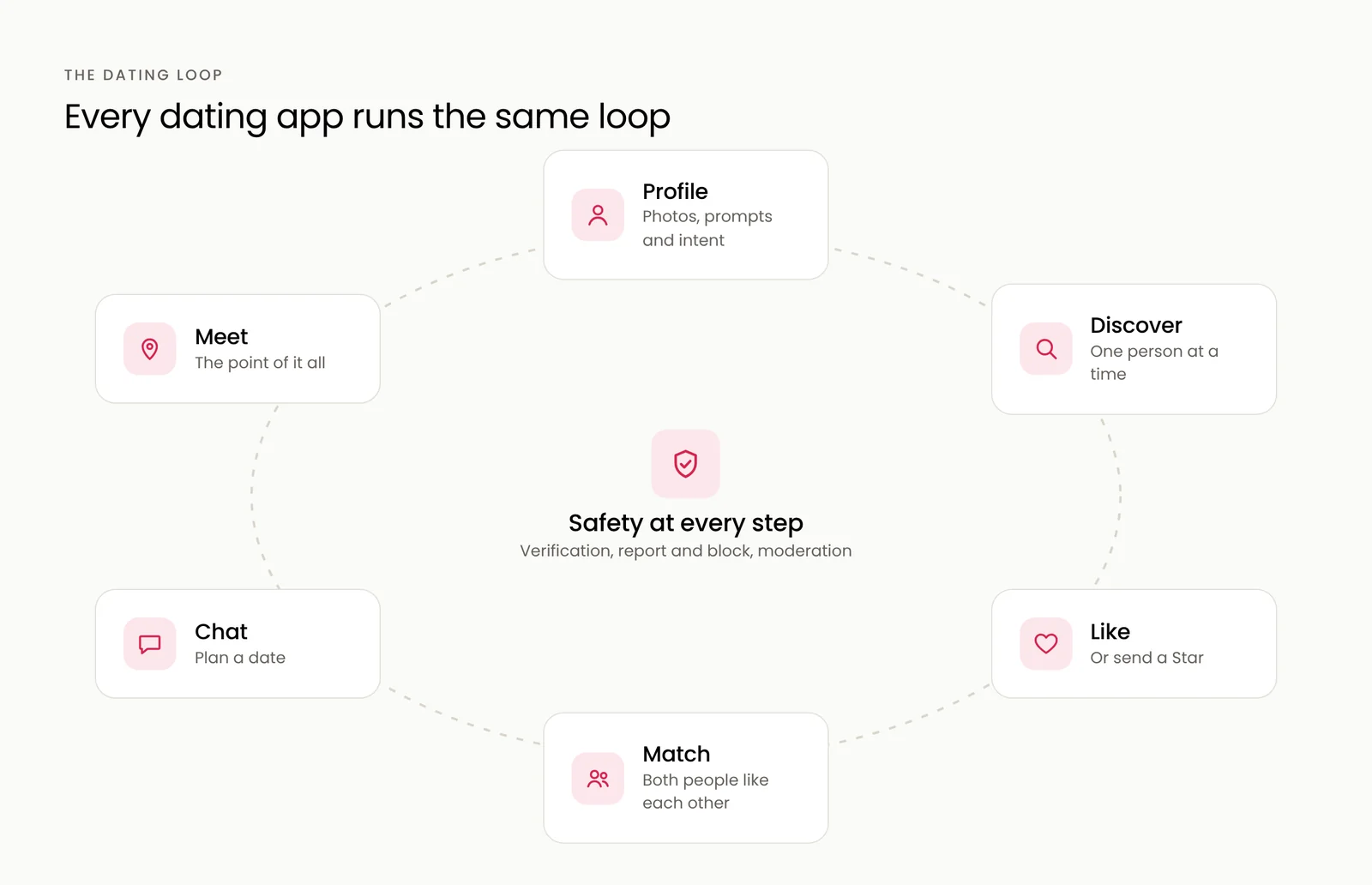
Every dating app runs the same loop: people create a profile, discover others, like them, match, talk and, if it goes well, meet. Each step has to feel safe and worth coming back to.
Must-have features
- Sign-up and verification: phone number or email, then photo or ID verification so people know who is real.
- Profiles with personality: photos, prompts and the basics, so people have something to talk about.
- Intent: what each person is looking for, from a partner for life to new friends, shown on the profile.
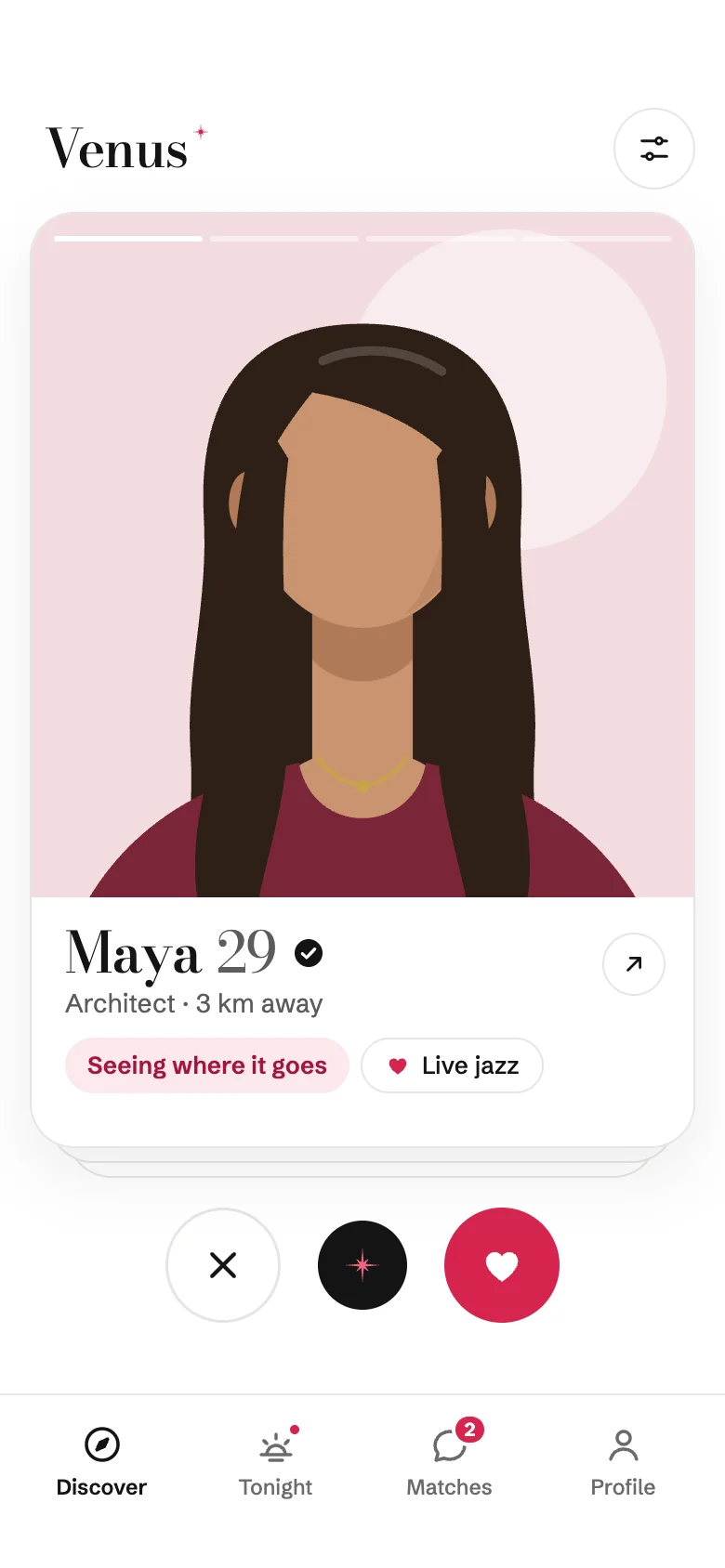
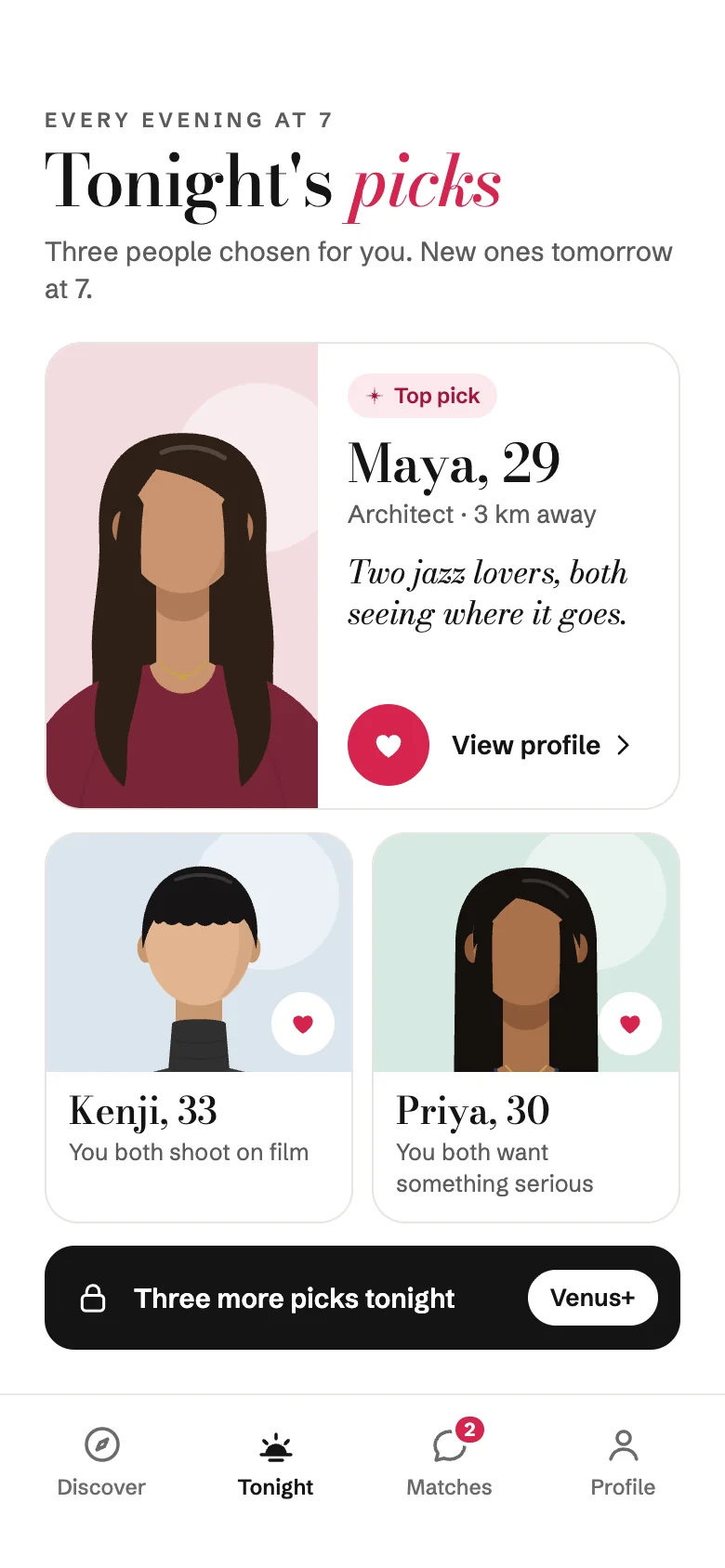
- Discovery: one profile at a time or a daily set of picks, with filters for age, distance and more.
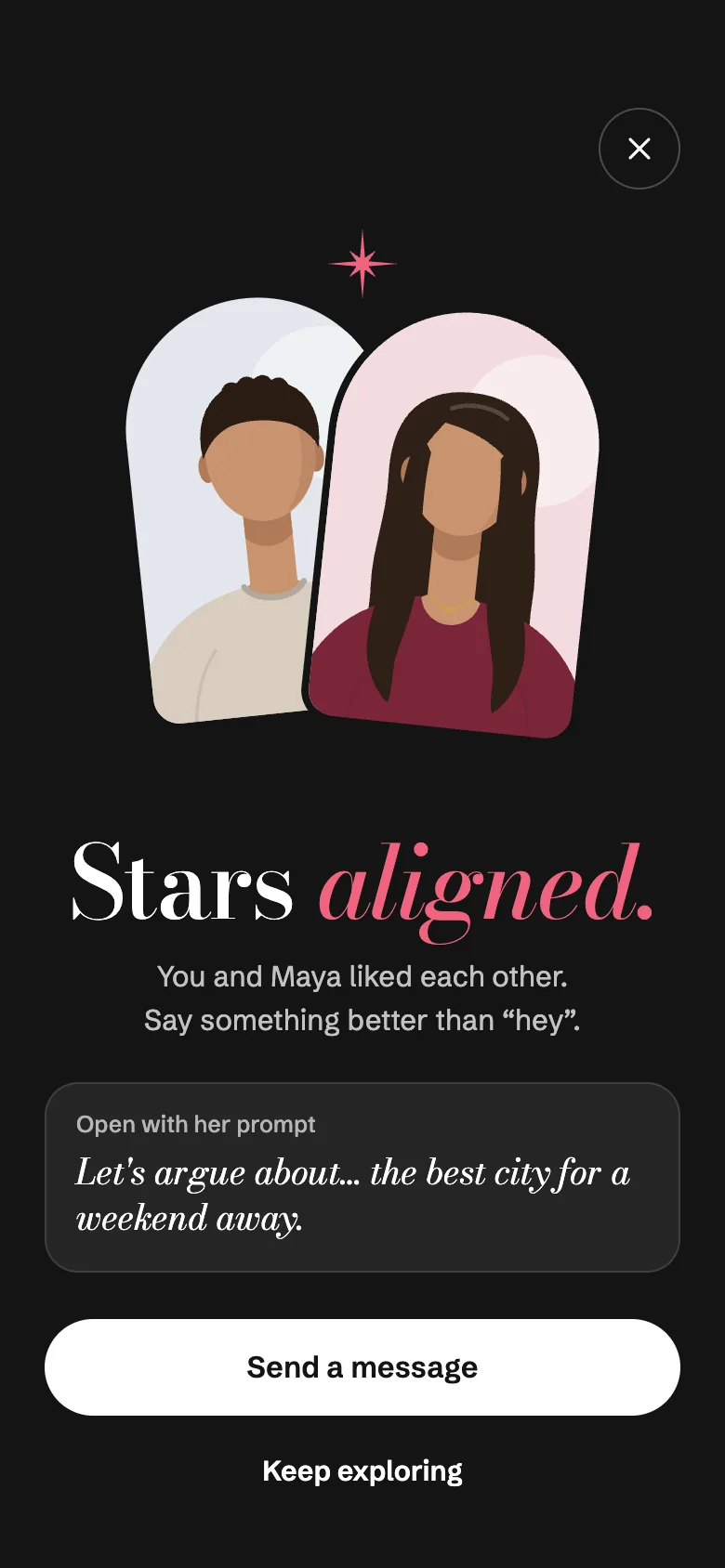
- Likes and matches: a match happens only when both people like each other.
- Chat: messages, photos and voice notes, with safety tools one tap away.
- Notifications: new matches and messages, without nagging.
Safety is the product
Trust decides whether a dating app grows. Plan for it from the first screen:
- Verification badges for people who have proved who they are.
- Report and block from every profile and every chat.
- Moderation tools in the admin console, with a queue of reports and clear actions.
- Privacy controls, such as hiding distance or browsing privately.
- Limits on contact, so people cannot message someone who has not matched with them.
How dating apps make money
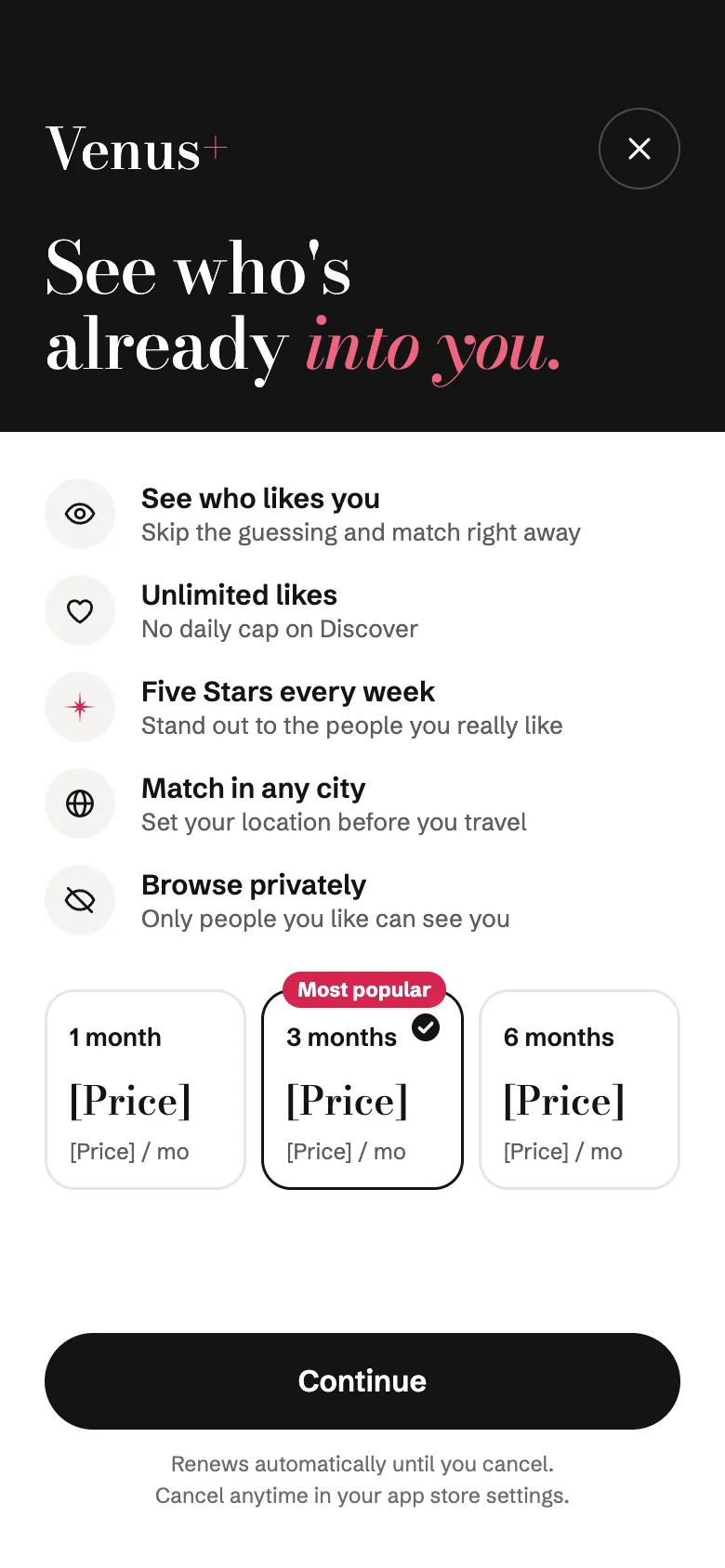
The most common model is a subscription: a free app with paid extras such as seeing who already likes you, unlimited likes, more ways to stand out and matching in other cities. In Venus that is Venus+, with monthly, three-month and six-month plans billed through the App Store and Google Play. One-off purchases, such as a single boost, can sit alongside.
What makes a dating app different
Most dating apps look alike. Venus stands out with intent on every profile, three picks every evening at 7 with the reason for each, and Stars for the people you really like. Pick one idea that makes your app feel different, and build the rest well.
The tech behind it
- Flutter for the iOS and Android apps, from one codebase.
- Node.js APIs for profiles, discovery and matching.
- Firebase for sign-in, push notifications and real-time chat.
- Cloud Firestore for profiles, likes, matches and messages.
- Google Cloud for hosting, photo storage and scheduled picks.
- App Store and Google Play billing for subscriptions.
- Angular for the admin console: verification, reports and moderation.
How long it takes
Our plan for Venus is about 10 weeks: a workshop in week 1, design in your brand in weeks 1 and 2, the apps and backend from week 2, subscriptions in weeks 7 and 8, testing on real phones and the store launch in week 10.
Frequently asked questions
How long does it take to build a dating app?
About 10 weeks from the first workshop to the App Store and Google Play when you start from a designed product like Venus. Building and designing from scratch takes longer.
How do dating apps make money?
Mostly through subscriptions with paid extras, such as seeing who likes you, unlimited likes and matching in other cities, billed through the App Store and Google Play. One-off boosts are a common addition.
How do you keep people safe on a dating app?
With verification, report and block on every profile and chat, privacy controls, limits on who can message whom, and a moderation team working from an admin console.


