How to build a social media app like Instagram
The features a social media app needs, the hard parts like video and moderation, the tech stack and the timeline, with our Pluto concept as the example.

Short answer: a social media app needs profiles, a feed, photo and video posting, stories, comments and likes, direct messages, notifications, privacy controls and an admin console for moderation, plus a media pipeline that stores, converts and delivers video quickly. Our Pluto concept covers all of it and takes about 12 weeks to launch.
The features people expect
- Sign-up with a phone number, email or Google, with a verification code.
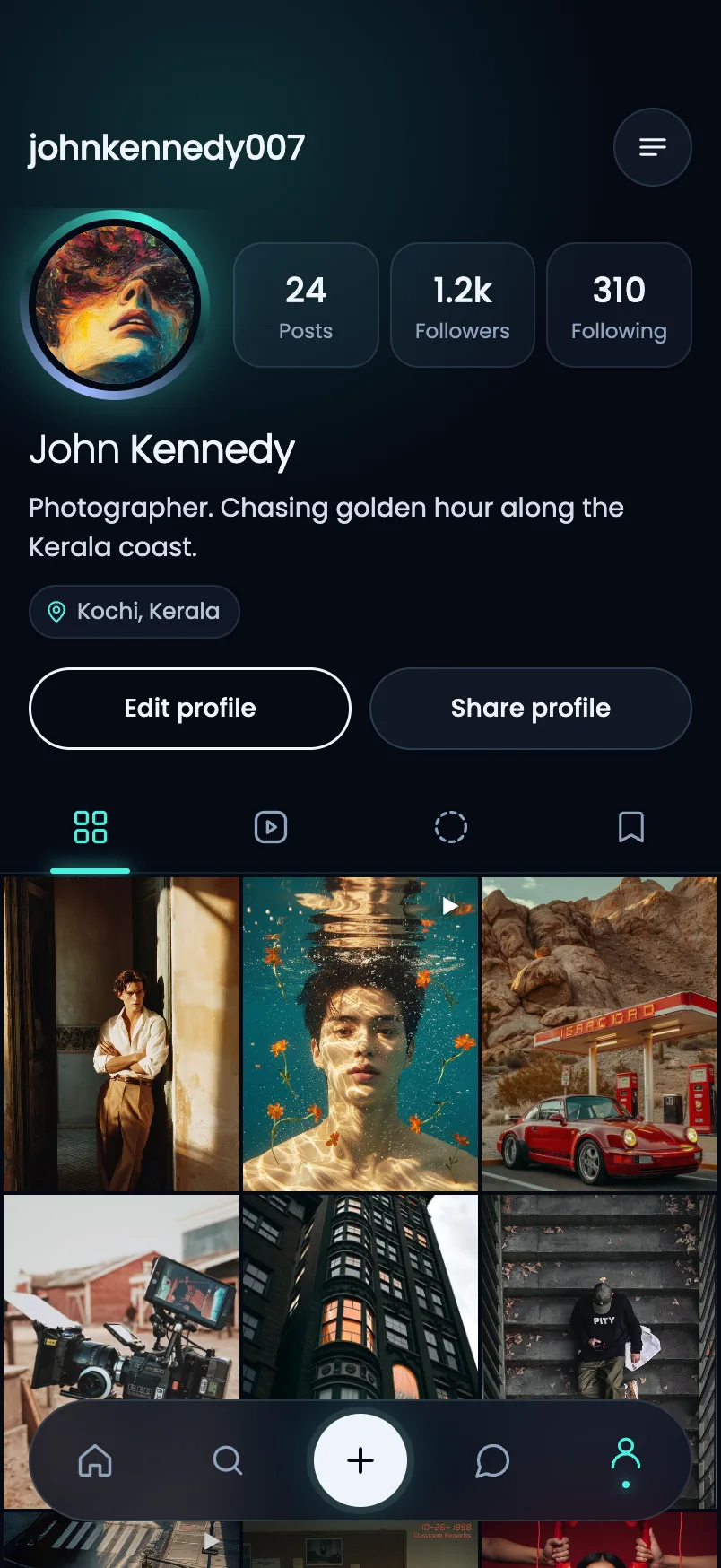
- Profiles with posts, Reels, saved items, followers and following.
- A feed of photos, videos and stories from people you follow.
- Creating: photos, short vertical videos and stories, with captions and tags.
- Engagement: likes, comments with replies, saves and shares.
- Messages: one-to-one chat with photos and voice notes.
- Notifications for likes, comments, follows and requests.
- Privacy and safety: private accounts, blocking, reporting and two-factor sign-in.
The hard parts
Video
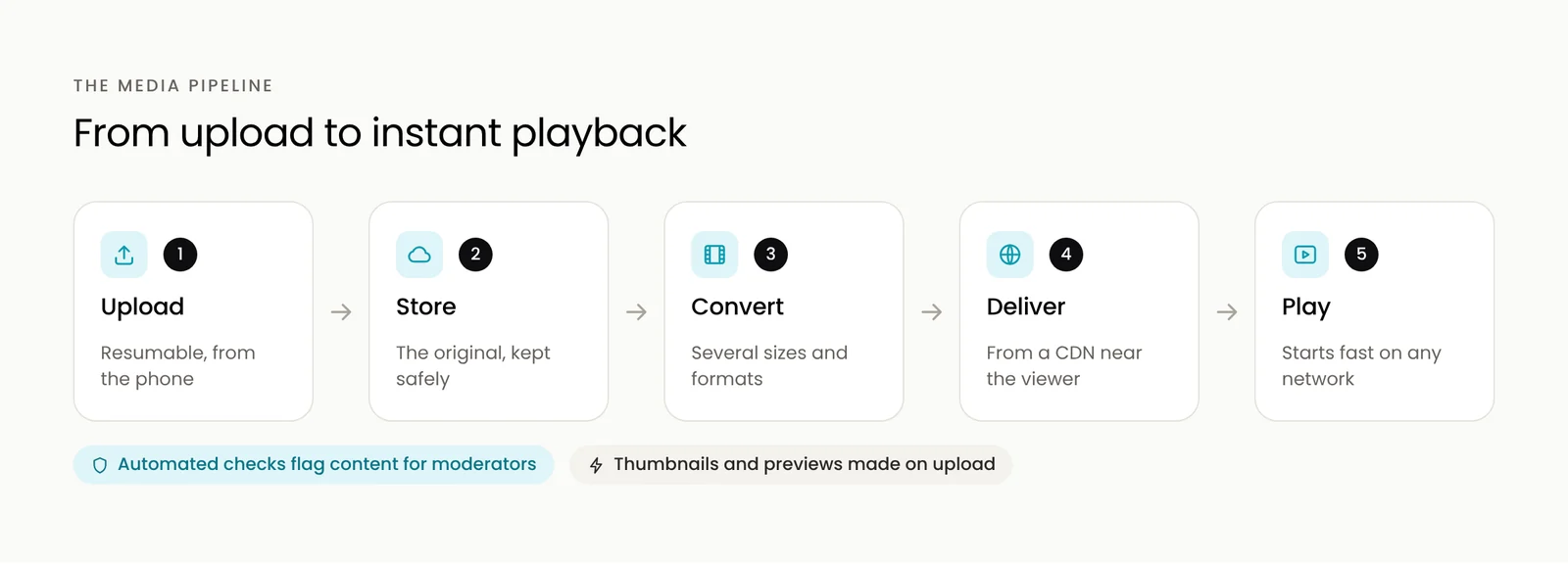
Video is the heaviest part of any social app. Every upload has to be stored, converted into several sizes and formats, and delivered quickly from a content delivery network (CDN), so it starts instantly on a slow connection.
The feed
A simple feed shows the newest posts from people you follow. Ranking by interest comes later, once you have enough activity to learn from.
Moderation
Every social app needs a way to deal with harmful content: reporting from every post, a moderation queue in the admin console, and automated checks that flag likely problems for people to review.
Privacy
Private accounts, blocking, hiding like counts and controlling who can message you are now expected, not extras.
What makes Pluto different
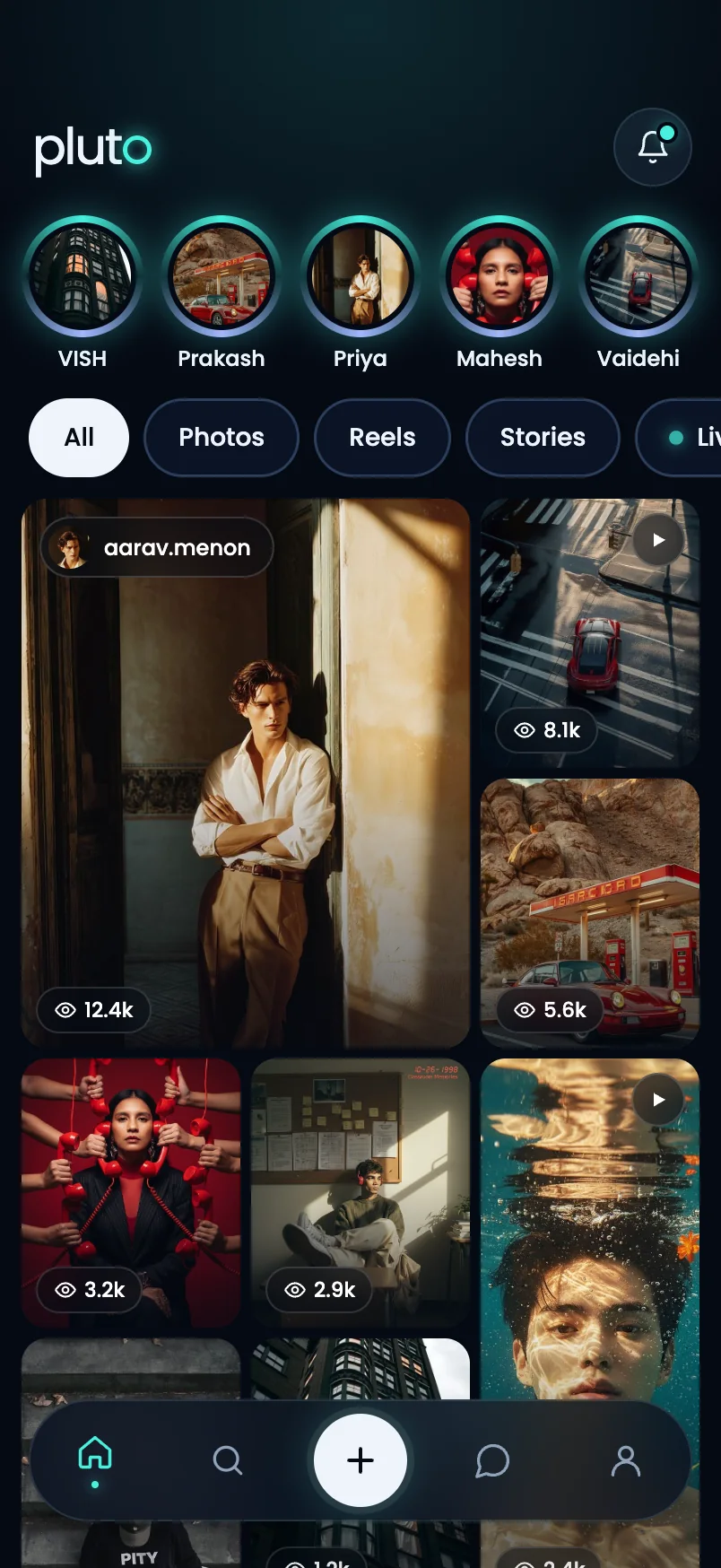
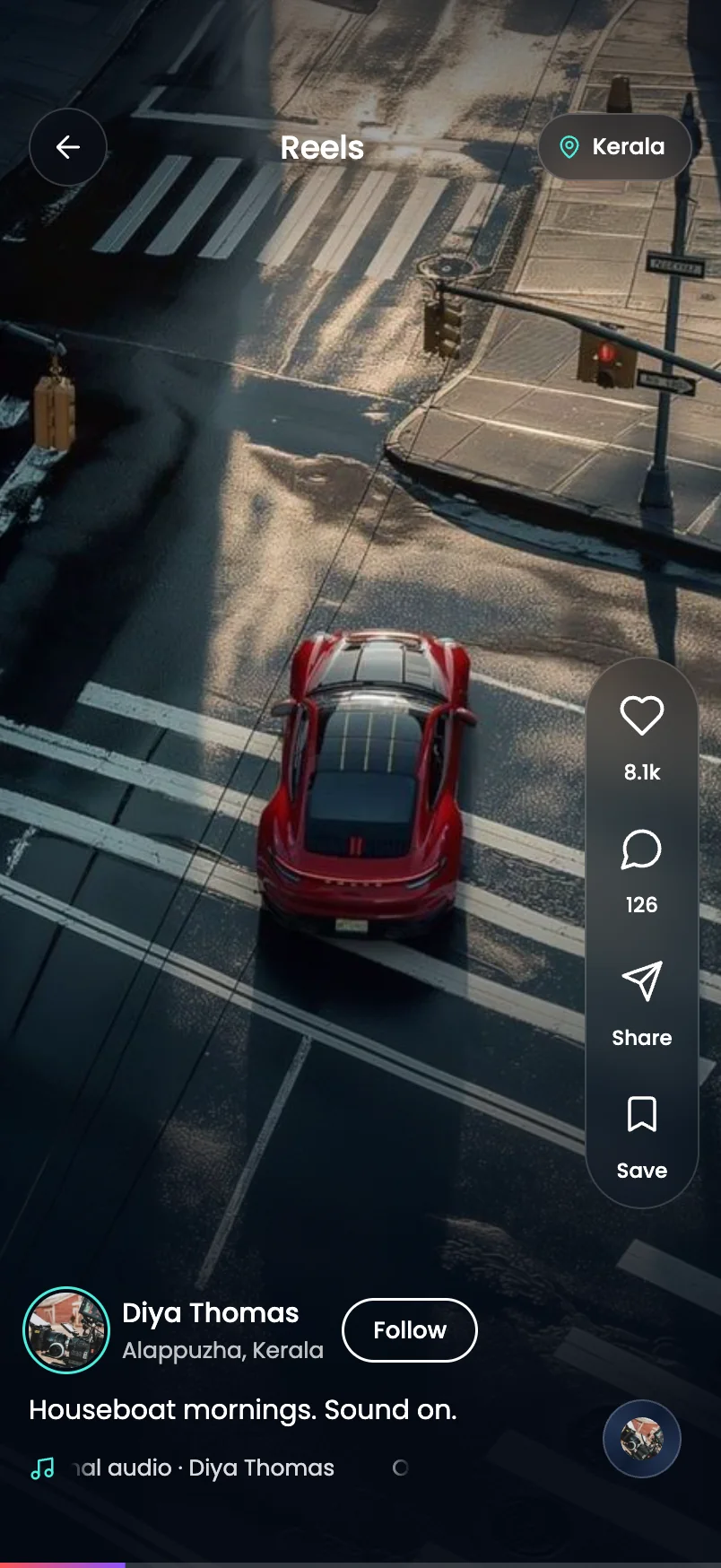
Most social apps look the same: one long timeline, numbers everywhere and settings buried deep. Pluto reimagines it with a visual grid where people choose what to open, full-screen viewing, one composer for posts, Reels and stories, and the controls people care about one tap away.
The tech stack
- Flutter for the iOS and Android apps.
- Node.js APIs for feeds, posts, follows, comments and notifications.
- Firebase for sign-in, push notifications and real-time messages.
- Cloud Firestore for posts, likes, follows and chats.
- Google Cloud Storage and a CDN for photos and video.
- Transcoder API to prepare every video for smooth playback.
- Angular for the admin console: reports, moderation, users and analytics.
The timeline
About 12 weeks: workshop and design in the first two weeks, the apps and backend from week 2, the admin console and moderation from week 6, testing in weeks 10 and 11, and the store launch in week 12.
Frequently asked questions
How long does it take to build an app like Instagram?
About 12 weeks for a first version with photos, Reels, stories, messages and an admin console, when you start from a designed product like Pluto.
What is the hardest part of building a social media app?
Video and moderation. Video needs a pipeline to store, convert and deliver every upload quickly, and moderation needs reporting, review tools and automated checks from day one.
Can a social media app be built for a private community?
Yes. The same features work for a members-only community, a brand's fans or an organisation's staff, with private sign-up and moderation run by your team.


