Launching an app in the UAE: data protection, hosting and Arabic support
Which data rules apply, where to host your data and how to support Arabic properly: three things to plan before you launch an app in the UAE.

Short answer: plan three things early. First, which data rules apply: the federal data protection law, the DIFC or ADGM rules if you are in those free zones, and sector rules such as those for health data. Second, where your data is hosted. Third, full Arabic support with right-to-left layouts. Getting these right from the start costs far less than retrofitting them.
This is a practical overview for product teams, not legal advice. Confirm your obligations with a lawyer in the UAE.
1. Which data rules apply
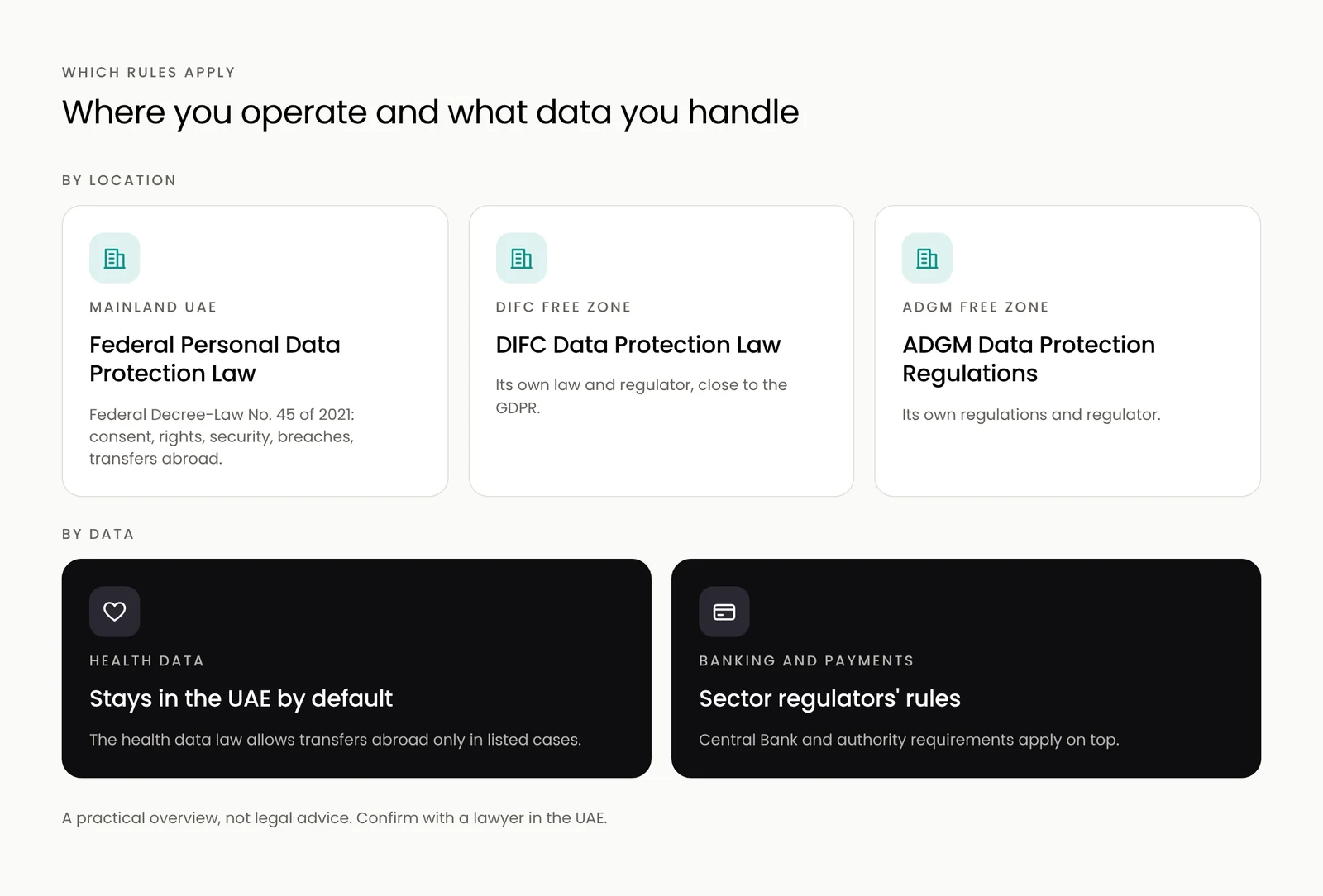
- Mainland UAE: the federal Personal Data Protection Law (Federal Decree-Law No. 45 of 2021) sets out consent, people's rights, security, breach notification and rules for sending data abroad.
- DIFC and ADGM: these financial free zones have their own data protection laws, closer to Europe's GDPR, with their own regulators.
- Health data: the UAE's health data law generally requires health information about services in the UAE to be stored and processed in the country, with specific exceptions.
- Banking and payments: regulated by the Central Bank and the relevant authorities, with their own requirements.
What this means for your app: ask for consent clearly, let people see, correct and delete their data, protect it properly, have a breach plan, and know where every piece of data is stored.
2. Where your data lives
Hosting in the UAE is the simplest way to meet data residency expectations and keep the app fast for local users. Major cloud providers, including AWS, Microsoft Azure and Oracle, run data centre regions in the UAE. Map your vendors too: SMS, email, analytics and AI services may process data outside the country, which needs to be covered by your contracts and consent.
3. Arabic, done properly
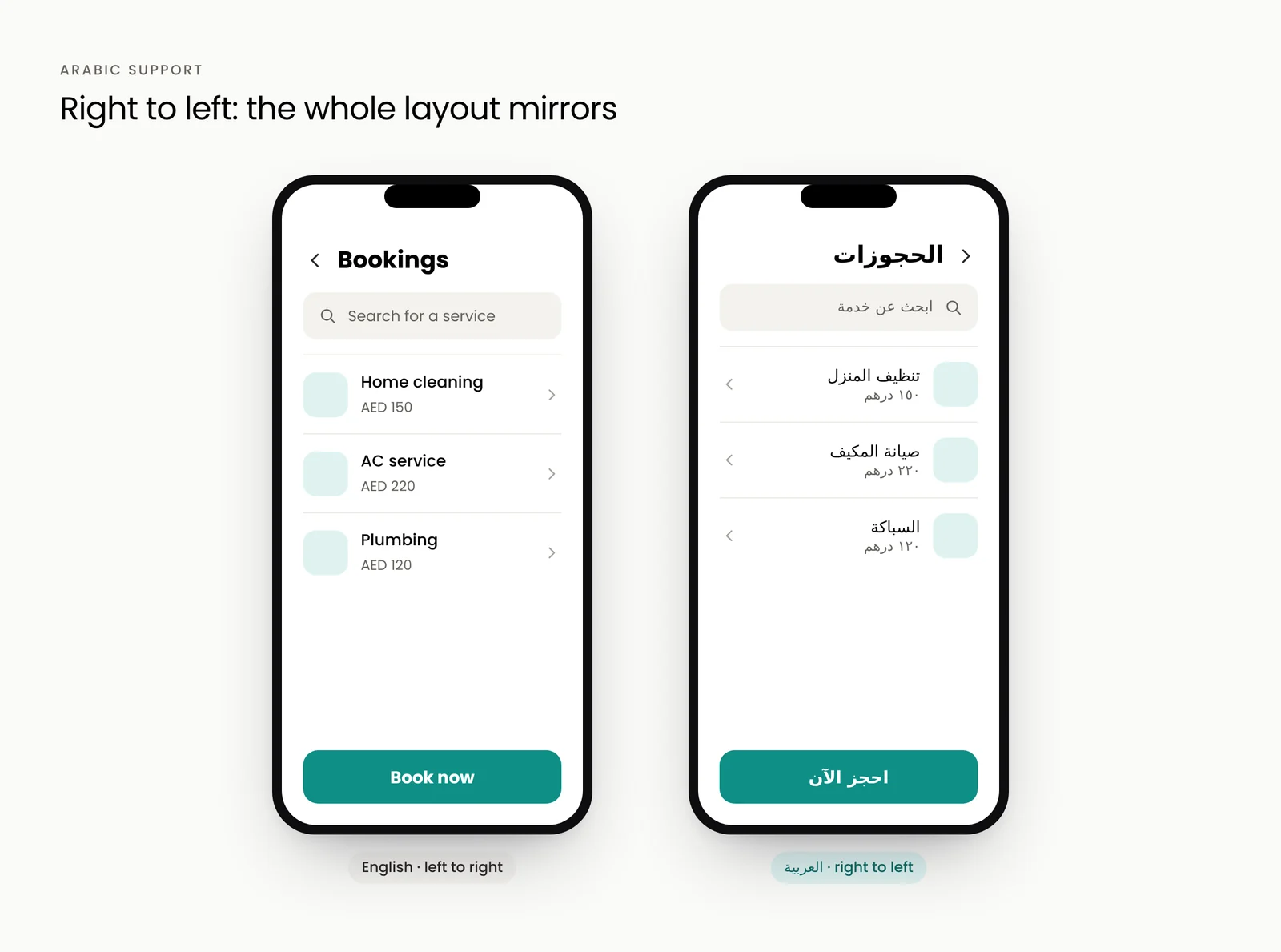
Arabic support is more than translated text:
- Right-to-left layouts. Navigation, icons with direction, progress bars and swipe gestures all mirror.
- Typography. Arabic needs fonts designed for it, with the right sizes and line heights.
- Mixed text. Phone numbers, prices and English brand names inside Arabic sentences need careful handling.
- Numbers and dates. Decide whether to show Western or Eastern Arabic numerals, and format dates for each language.
- Human translation. Machine translation is a starting point, never the final copy.
- Language switching that remembers each person's choice.
Modern frameworks support this well: Flutter, for example, mirrors layouts automatically when the language is right-to-left, as long as the app is built with that in mind from the start.
4. Payments and pricing
Show prices in dirhams with VAT where it applies, and offer the payment methods people in the UAE expect, such as cards and Apple Pay, through a local payment gateway.
5. App store details
Prepare Arabic store listings and screenshots, privacy details for both stores, and support contacts in your working hours.
Humanoid Systems has a team in Sharjah and builds apps for clients across the UAE and India. Talk to us about launching in the UAE.
Frequently asked questions
Does my app need to store data in the UAE?
For some data, yes. Health data about services in the UAE generally has to stay in the country, and many businesses choose UAE hosting for other data too. Check the rules for your sector with a lawyer.
Which data protection law applies to my app in the UAE?
On the mainland, the federal Personal Data Protection Law. In the DIFC and ADGM free zones, their own data protection laws. Sector rules, such as those for health data, can add requirements.
Is it hard to add Arabic to an existing app?
It is much easier when planned from the start. Retrofitting right-to-left layouts, Arabic typography and mixed-language text into an existing app usually touches most screens.


